It’s summertime, and that means it’s growing season! Even if you don’t have a green thumb, chances are that you’ve been doing some kind of lawn care this year, such as pulling weeds or mowing the grass (or hiring us for lawn care service in Manassas, VA, so we can do the dirty work). In order to keep your lawn healthy as we move into the middle and end of summer, there’s something else you should add to your list: watering the grass. But when should you do it, and how do you know you’re doing the right thing?
Figuring out how often to water grass on your property may seem intimidating at first, but don’t get caught in the weeds — Precision Lawn & Landscape is here to answer all of your questions about watering schedules!
Water Enough — But Not Too Much
Your grass is a lot like Goldilocks. It doesn’t need too much water; it doesn’t need too little water; it needs the amount of water you provide to be just right. As a general rule, grass needs about one to one and a half inches of water per week, whether it’s from sprinklers or from precipitation. You should aim to soak the top six to eight inches of soil, which will require different amounts of water depending on the size of your property.
It is important to note that water amount is not one-size-fits-all. The amount of water your lawn needs is based on the types of grasses that grow on your property. Speak with landscaping professionals to determine the following about your lawn:
- Do you have warm-season grass, cool-season grass, or another type?
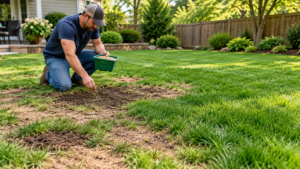
- Are your grass roots intact, or do you need grass seed replanted?
- Is your established lawn healthy, or does it need additional care?
- What sprinkler system is best for your lawn?
Check On Your Grass
To ensure your grass is getting the correct amount of water, keep an eye on it every day. Watch out for these warning signs of a dry lawn:
- Your soil is dry less than six to eight inches deep underneath the grass.
- Your grass is developing a dry, brittle texture.
- You notice discoloration, particularly yellowing.
- Footsteps or other impressions in the grass take several seconds to disappear.
Here are some signs you could be over-watering:
- There are puddles of water on your lawn.
- There seems to be more mud than grass in your yard, even though you swear there was grass there last week.
- You spot brown patches among the grass.
- Your lawn develops ring spot fungus, a disease caused by severe over-watering.
Pick the Right Time
There’s no wrong time of day to water your grass, but some times are better than others. During the summer, the best time of the day to water your grass is in the early morning. By 10:00 AM, the sun will be blazing down on your lawn, so set your sprinklers up or grab the hose and get the job done a few hours beforehand. The process usually takes about 30 minutes for small to medium-sized lawns and 45 for large properties, although there’s no specific amount of time you should water for.
Let Mother Nature Provide
You don’t always have to do the watering yourself. Sometimes, there is an ally on your side: rain. If the weather turns rainy, skip running your sprinklers for a few days. Keeping an eye on predicted rainfall amounts can help you ensure that your grass gets that perfect amount of water, although it’s rare for rain to “over-water” grass as much as humans tend to, so you probably shouldn’t worry about a front-yard flood!
Call Precision Lawn & Landscape Today!
Do you want help setting up a sprinkler system or learning more about irrigating your grass? Precision Lawn & Landscape does it all, from watering your lawn to providing tree and bush trimming services. Don’t wait for the summer heat to dry out your lawn to a crisp. Contact our landscaping pros today and watch in amazement as your grass grows healthier than ever before!