Bare patches can quickly make an otherwise healthy lawn look thin, uneven, and neglected. While small areas may be relatively easy to repair, recurring or widespread bare spots can point to deeper problems involving compacted soil, heavy foot traffic, insufficient sunlight, improper watering, pests, disease, or weak turf growth. Learning how to fix bare spots in lawn starts with understanding why the grass disappeared in the first place and then creating better conditions for new grass to establish.
For homeowners dealing with more extensive damage, knowing how to fix large bare spots in lawn often requires more than simply scattering grass seed over exposed soil. Proper preparation, soil improvement, aeration, overseeding, watering, and ongoing lawn care can all play a role in restoring thicker, healthier grass.
Why Do Bare Spots Develop in a Lawn?
Bare areas rarely appear without a reason. Even when reseeding temporarily improves the lawn, the problem may return if the underlying cause is left unaddressed.
Some of the most common causes of bare lawn spots include:
- Heavy foot traffic: Frequent walking, children playing, pets, and outdoor activities can compress the soil and damage grass.
- Soil compaction: Dense soil makes it more difficult for grass roots to receive adequate air, water, and nutrients.
- Drought and heat stress: Extended periods of hot or dry weather can weaken turf and cause sections to die back.
- Improper watering: Too little water can dry out grass, while excessive watering can encourage shallow roots and lawn disease.
- Poor soil conditions: Nutrient deficiencies, improper pH, or poor drainage can prevent healthy grass growth.
- Pet damage: Concentrated urine and repeated traffic can create dead or thinning areas.
- Lawn diseases and insects: Fungal diseases, grubs, and other pests may damage grass from above or below the soil.
- Excessive shade: Grass varieties that need substantial sunlight may gradually thin beneath trees or near buildings.
- Scalping from mowing: Cutting the lawn too short can stress grass and expose the soil.
- Thick thatch: Excessive thatch can interfere with water, nutrient, and seed-to-soil contact.
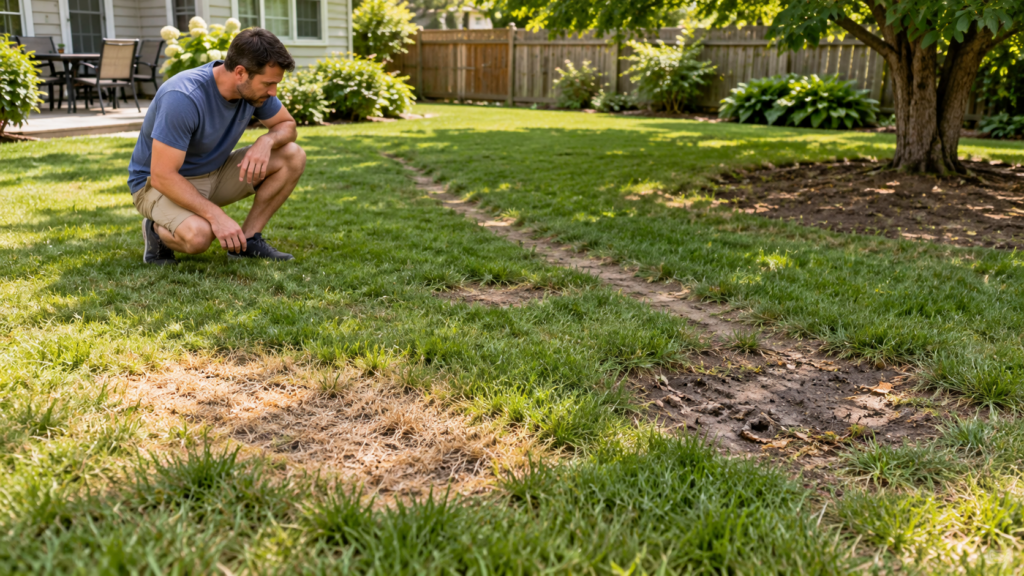
Before repairing an area, examine its location and condition. A patch near a frequently used walkway may have a different cause than one appearing beneath a tree or in a low area that remains wet after rainfall.
How to Fix Bare Spots in Lawn Step by Step
Once you have identified and corrected the likely cause, you can begin repairing the damaged turf. Successful lawn repair depends largely on creating good seed-to-soil contact and giving new grass the moisture and nutrients it needs to establish.
1. Clear Away Dead Grass and Debris
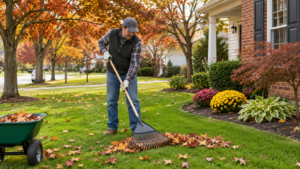
Begin by removing dead turf, leaves, excessive thatch, and other debris from the bare area. Use a rake to expose the soil without aggressively disturbing healthy grass around the perimeter.
Clearing the area gives grass seed better access to the soil and allows you to examine its condition more closely.
2. Loosen the Exposed Soil
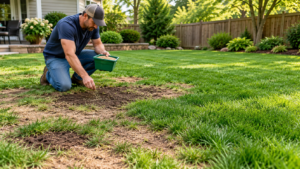
Bare ground can become hard and compacted, particularly in areas that receive frequent foot traffic. Loosen the upper portion of the soil with a garden rake or similar tool so that new roots have room to develop.
For small isolated patches, loosening the surface manually may be sufficient. When bare areas appear throughout the lawn, however, widespread soil compaction may require core aeration.
3. Correct Any Soil Problems
Healthy turf depends on healthy soil. If bare spots continually return, consider whether drainage, soil compaction, nutrient levels, or soil pH could be interfering with grass growth.
A soil test can help determine whether amendments are necessary. Avoid simply adding large amounts of fertilizer without knowing what the soil requires, since unnecessary applications may not address the actual problem.
4. Apply the Appropriate Grass Seed
Choose grass seed suited to your existing lawn and local growing conditions. Using a compatible seed helps repaired areas blend more naturally with surrounding turf.
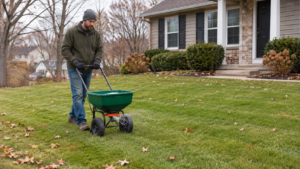
Spread the seed evenly across the prepared soil according to the recommended seeding rate. Avoid applying an excessively thick layer. Too many seedlings competing in one area can reduce airflow and make establishment more difficult.
5. Improve Seed-to-Soil Contact
After spreading seed, lightly rake the area so the seed settles against the soil rather than remaining on top of existing grass or debris.
Good seed-to-soil contact is one of the most important factors in successful germination. A very light layer of appropriate topdressing may also help protect seed and retain moisture, but the seed should not be buried deeply.
6. Keep the Area Consistently Moist
New grass seed needs dependable moisture during germination. Water repaired areas lightly and regularly so the soil remains moist without becoming saturated.
Once seedlings become established, gradually transition away from frequent shallow watering toward deeper watering that encourages stronger root development.
7. Protect New Grass While It Establishes
Keep people and pets away from newly seeded areas whenever possible. Fresh seedlings are vulnerable to traffic because their root systems are still developing.
Allow the grass to become established before returning to normal use and mowing practices.
How to Fix Large Bare Spots in Lawn
Understanding how to fix large bare spots in lawn requires looking beyond the individual patch. When significant portions of a yard are thin or bare, the problem may involve the overall growing environment rather than one isolated area.
Large damaged sections may benefit from a broader lawn renovation approach that includes:
- Identifying the cause of turf loss
- Removing dead or severely damaged grass
- Addressing soil compaction
- Improving drainage where necessary
- Correcting nutrient or soil pH problems
- Core aerating the surrounding turf
- Overseeding the damaged area and nearby thin sections
- Establishing an appropriate watering schedule
- Adjusting mowing and lawn maintenance practices
Treating the surrounding lawn can be especially important. If only the completely bare section receives seed, nearby thin turf may continue declining and create additional exposed areas later.
Why Core Aeration Can Help Repair Thin and Bare Lawns
Compacted soil is one of the most common obstacles to healthy turf growth. When soil particles become tightly packed, water and nutrients have difficulty reaching the root zone, while roots themselves have less room to expand.
Core aeration addresses compaction by mechanically removing small plugs of soil from the lawn. These openings improve access to air, water, and nutrients while creating additional room for root development. Precision Lawn & Landscape uses core aeration techniques that remove soil plugs and leave them on the lawn to naturally break down.
Aeration can be especially valuable when bare or thin areas are associated with:
- Heavy foot traffic
- Clay-heavy or compacted soil
- Poor water absorption
- Shallow root development
- General turf thinning
- Repeated difficulty establishing new grass
Core aeration does not automatically solve every cause of bare turf, but it can improve the soil environment when compaction is contributing to the problem.
Why Aeration and Overseeding Work Well Together
Repairing bare areas requires new grass growth, which is where overseeding becomes particularly useful. Overseeding distributes new grass seed through thin or declining areas to help improve overall turf density.
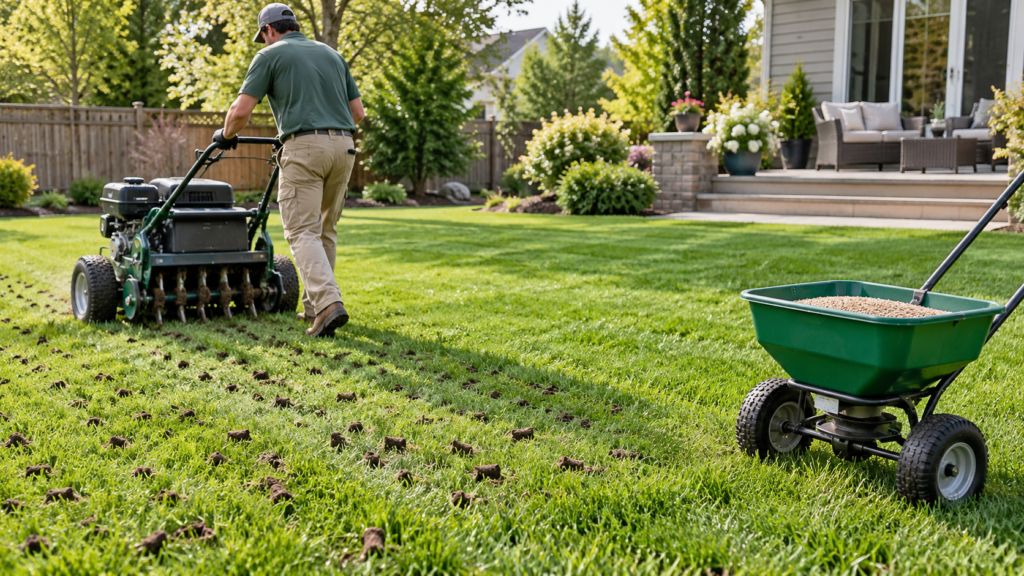
Pairing overseeding with core aeration can provide an especially effective approach because the aeration process creates additional openings where seed can reach exposed soil. Precision Lawn & Landscape also recommends pairing aeration and overseeding when lawns have become thin or stressed.
Rather than treating only individual bare patches, overseeding can strengthen the surrounding turf as well. A thicker lawn can help reduce the amount of open space available for weeds while giving the property a more uniform appearance.
When Is the Best Time to Repair Bare Spots?
Timing matters because new grass establishes most successfully when growing conditions favor the type of turf being planted.
In Northern Virginia, fall can be particularly valuable for repairing cool-season lawns. Cooler temperatures reduce some of the environmental stress associated with summer while still providing an active growing period.
Precision Lawn & Landscape offers core aeration during both spring and fall but recommends fall as the preferred season. Its fall aeration schedule generally begins in September, continues through October, and begins slowing in November.
This seasonal timing also creates an opportunity to combine aeration with overseeding so thin and damaged turf can begin developing stronger growth before winter.
How To Prevent Bare Spots From Coming Back
Repairing exposed soil is only part of the process. Long-term results depend on reducing the conditions that caused the grass to disappear.
Maintain the Right Mowing Height
Repeatedly cutting grass too short can weaken turf and make it less tolerant of heat, drought, and other stress.
Many cool-season grasses used in Northern Virginia lawns perform well when maintained taller rather than being closely cropped. Precision Lawn & Landscape notes that tall fescue, for example, is commonly maintained around 3–4 inches during much of the growing season.
Follow the One-Third Mowing Rule
Avoid removing more than approximately one-third of the grass blade during a single mowing. Cutting significantly more can stress the plant and reduce the leaf surface it uses for photosynthesis.
When grass becomes unusually tall, gradually return it to the desired height over multiple mowings.
Water According to Lawn Conditions
Established grass generally benefits from watering practices that encourage deeper roots rather than consistently keeping only the surface wet.
Pay attention to rainfall, temperature, soil conditions, drainage, and signs of turf stress rather than watering on an inflexible schedule.
Reduce Repeated Traffic
If the same part of the lawn continually becomes bare, consider whether people or pets regularly cross that area.
Creating a walkway, stepping-stone path, or alternative traffic route may provide a more permanent solution than repeatedly reseeding grass that continues to be stepped on.
Address Shade Problems
Some areas simply may not receive enough sunlight to support the same grass variety growing elsewhere in the lawn. Pruning trees where appropriate, choosing more shade-tolerant turf, or considering alternative landscaping may offer better results than repeatedly trying to grow sun-loving grass in deep shade.
Stay Ahead of Lawn Health Problems
Fertilization, weed management, insect control, disease management, aeration, overseeding, mowing, and seasonal cleanups can all contribute to maintaining stronger turf. Precision Lawn & Landscape offers these and other lawn care services throughout Northern Virginia.
Restore Thin and Bare Lawns With Precision Lawn & Landscape
At Precision Lawn & Landscape, we provide comprehensive residential lawn care services for properties throughout Northern Virginia. Our lawn care solutions are designed to address more than the appearance of your grass by supporting healthier growing conditions through services such as fertilization, weed control, insect and disease management, lime treatments, core aeration, overseeding, mowing, and seasonal lawn maintenance. Our service area includes communities such as Woodbridge, Manassas, Dumfries, Montclair, Lake Ridge, Dale City, and other parts of Northern Virginia.
For lawns with bare or thinning areas, our lawn aeration services can help relieve compacted soil using core aeration techniques that physically remove plugs from the ground. We can also pair aeration with our overseeding services to introduce new grass seed and help improve turf density. Because fall generally provides favorable conditions for cool-season lawn recovery in our region, we recommend fall aeration whenever appropriate, with our fall service typically running from September through October and tapering off in November.

Get a Free Quote and Start Restoring Your Northern Virginia Lawn
Bare areas do not have to become a permanent part of your landscape. Once you understand how to fix bare spots in lawn, you can address the underlying cause, improve the soil, establish new grass, and make changes that support healthier growth going forward. For homeowners learning how to fix large bare spots in lawn, combining proper soil preparation with core aeration, overseeding, and consistent lawn care can provide a more complete approach to restoring thin or damaged turf.
If your lawn has persistent bare spots, compacted soil, thinning grass, or other signs that it needs professional attention, contact Precision Lawn & Landscape today for a free quote. Our team can help homeowners throughout Northern Virginia build a stronger, thicker, healthier lawn with professional lawn care, core aeration, overseeding, and other services tailored to their property.
FAQs
To learn how to fix bare spots in lawn, start by identifying what caused the grass to die, such as compaction, heavy traffic, poor watering, pests, or disease. Then remove dead material, loosen the soil, add seed, improve seed-to-soil contact, and keep the area consistently moist while new grass becomes established.
If you are wondering how to fix large bare spots in lawn, the repair process usually requires more than spot seeding alone. Larger damaged areas may benefit from soil improvement, core aeration, overseeding, proper watering, and correcting issues such as compaction, drainage problems, or excessive traffic.
The timeline depends on the grass variety, soil conditions, weather, watering, and how well the area was prepared. Grass seed may begin germinating within days or weeks, but the repaired area can take considerably longer to develop into dense, established turf.
Recurring bare patches often indicate an underlying issue that has not been corrected. Common causes include compacted soil, poor drainage, repeated foot traffic, pet damage, shade, pests, disease, or improper mowing and watering practices.