A thick, healthy lawn depends on more than what is happening above the soil. Over time, foot traffic, lawn equipment, weather, and naturally dense soil can make it harder for grass roots to access the air, water, and nutrients they need. At the same time, established lawns can gradually thin out, leaving weak areas where weeds and bare patches are more likely to develop. Core aeration and overseeding address both problems at once by improving the growing environment below the surface while introducing new grass seed to strengthen the turf above it.
Although either service can benefit a lawn on its own, they are especially effective when performed together. Understanding the core aeration and overseeding process can help homeowners see why combining these two lawn treatments is one of the most practical ways to encourage thicker, healthier grass.
What Is Core Aeration?
Core aeration is a lawn care technique that mechanically removes small plugs, or cores, of soil and thatch from the ground. Rather than simply poking holes into the surface, a core aerator physically extracts soil plugs, creating open channels through compacted areas.
Soil compaction happens when individual soil particles become pressed tightly together. This reduces the amount of open space available for air and water to move through the soil and can make it more difficult for grass roots to expand.
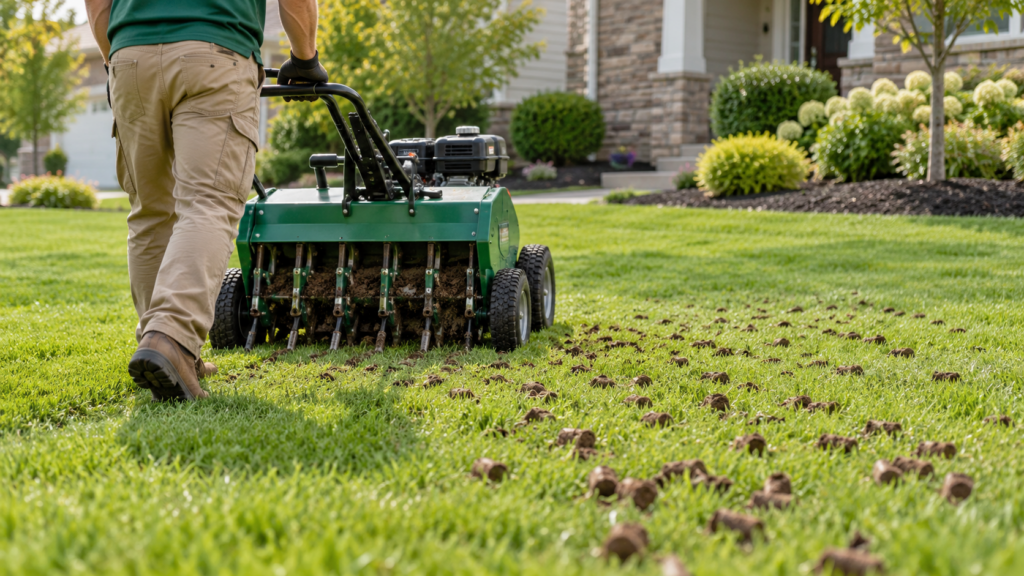
By removing soil cores, aeration helps:
- Loosen compacted soil
- Improve airflow around the root zone
- Allow water to penetrate the soil more effectively
- Improve access to nutrients
- Encourage stronger and deeper root development
- Reduce some of the barriers created by excessive surface compaction
The plugs left behind after aeration can remain on the lawn. As they naturally break apart and decompose, the soil is gradually returned to the turf.
For lawns that experience regular foot traffic, mowing equipment, outdoor activities, or naturally compacted soil, core aeration can play an important role in maintaining healthier growing conditions.
What Is Overseeding?
Overseeding is the process of spreading new grass seed across an existing lawn without removing the established turf. Rather than starting the lawn over, overseeding supplements the grass that is already growing.
Lawns can become thinner over time for many reasons, including summer heat, drought stress, disease, insects, heavy traffic, and ordinary turf aging. Once grass becomes sparse, open areas provide more opportunities for weeds to establish and can leave the lawn looking patchy or uneven.
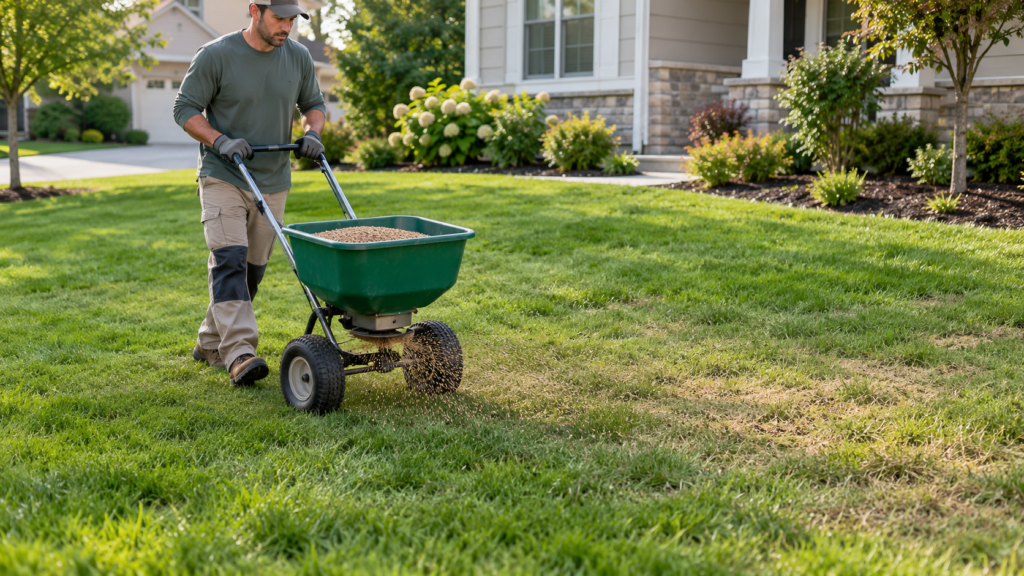
Overseeding introduces new grass plants into these weaker areas. When successful, it can help:
- Fill thin or bare sections of turf
- Increase overall lawn density
- Improve the lawn’s appearance and color
- Replace grass that has declined from seasonal stress
- Develop a thicker stand of turf
- Reduce open spaces where weeds may otherwise establish
However, simply scattering seed over an existing lawn does not guarantee good results. Grass seed needs adequate contact with the soil, consistent moisture, and favorable growing conditions to germinate successfully.
That is where core aeration becomes especially useful.
Why Core Aeration and Overseeding Work Better Together
The biggest advantage of combining core aeration and overseeding is that aeration prepares the lawn for the new seed.
When seed is spread over dense grass, compacted soil, or a heavy layer of organic material, some of it may remain on top of the lawn instead of reaching the soil. Seed that has poor soil contact is more vulnerable to drying out, washing away, or failing to germinate.
Core aeration changes those conditions.
The openings created by the aerator expose soil throughout the lawn. When overseeding follows, some of the new seed can settle around these openings and make better contact with the growing medium.
Instead of treating soil compaction and thinning turf as separate problems, the two services complement each other:
Core aeration improves the growing environment. It relieves compaction and creates more pathways for moisture, oxygen, and nutrients.
Overseeding adds new turf growth. Fresh grass seed helps increase density in lawns that have become thin or stressed.
Together, the lawn gains both improved soil conditions and an opportunity to establish additional healthy grass.
The Core Aeration and Overseeding Process Explained
The core aeration and overseeding process is relatively straightforward, but the order of the services is important.
1. Evaluate the Condition of the Lawn
Before treatment begins, the lawn should be evaluated for problems such as compaction, thinning grass, bare patches, disease, drainage concerns, and general turf stress.
This makes it easier to determine whether aeration and overseeding are appropriate and which areas may require the most attention.
2. Prepare the Lawn
Grass should be in suitable condition before aeration takes place. The soil also needs enough moisture for the aerator to penetrate effectively without being excessively wet or muddy.
Irrigation components, sprinkler heads, invisible fencing, or other lawn obstacles may also need to be identified before mechanical aeration begins.
3. Perform Core Aeration
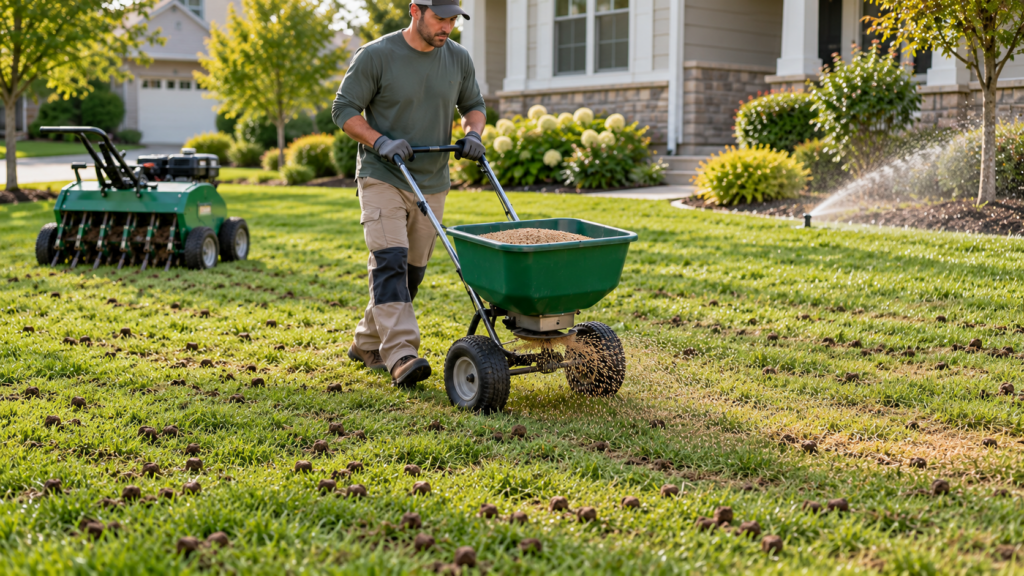
A core aerator passes across the lawn and removes small plugs of soil. These openings relieve compaction and temporarily create direct pathways into the soil.
Unlike spike aeration, which presses into the ground without removing soil, core aeration physically removes material from the lawn.
4. Spread Grass Seed
Once the lawn has been aerated, grass seed can be spread across the existing turf.
Because aeration has created numerous openings and exposed additional soil, the seed has more opportunities to make contact with the ground rather than simply resting on top of dense grass.
5. Maintain Proper Moisture
New grass seed requires consistent moisture during germination and early establishment.
The goal is generally to keep the seedbed adequately moist without creating puddles or washing seed away. Watering requirements can change as seedlings become established, so homeowners should follow the recommendations provided for their particular lawn and seed mixture.
6. Allow New Grass to Establish
Over the following weeks, successful seed begins to germinate and produce new grass plants.
During this period, unnecessary foot traffic should be minimized so young seedlings have time to establish. Proper watering and appropriate mowing practices also help support the developing turf.
Benefits of Combining Core Aeration and Overseeding
Pairing the two services produces several complementary benefits that can be difficult to achieve through either treatment alone.
Better Seed-to-Soil Contact
Good seed-to-soil contact is one of the most important factors in successful germination.
Aeration exposes soil throughout the lawn, creating additional places where seed can settle close to the ground. This gives newly applied seed a better opportunity to access moisture and begin growing.
Reduced Soil Compaction
Adding seed does not correct heavily compacted soil on its own.
By aerating first, the lawn receives the soil improvement needed to create a more favorable environment for both existing grass and new seedlings.
Improved Movement of Water, Air, and Nutrients
The holes created during aeration temporarily increase pathways into the root zone. This can improve how water, oxygen, and available nutrients move through compacted areas of the lawn.
Existing turf benefits from those improved conditions while newly germinating grass begins establishing roots.
Thicker Turf
Overseeding adds new grass plants between existing turf.
As new seedlings mature, they can help fill sparse areas and create a more uniform lawn. Increased turf density can also leave fewer open spaces available for weeds to take hold.
Stronger Root Development
Healthy turf depends on healthy roots.
Relieving soil compaction gives established grass roots additional room to grow, while overseeding introduces young plants that can establish new root systems. Over time, this creates a stronger foundation for the lawn.
Recovery From Seasonal Stress
Summer can be difficult on lawns, particularly after periods of heat, dryness, foot traffic, or other environmental stress.
Fall aeration and overseeding can help rehabilitate areas that have become thin during the growing season and prepare the lawn for future growth.
Why Timing Matters for Core Aeration and Overseeding
Core aeration is a beneficial lawn treatment, but it should be performed when the grass is actively growing and capable of recovering from the process.
At Precision Lawn & Landscape, we offer core aeration in both spring and fall, but fall is generally the preferred season. Cooler temperatures place less stress on the turf compared with summer conditions, while actively growing grass is better positioned to recover from aeration and establish new roots.
Our fall aeration season typically begins in September, continues through October, and starts slowing down in November.
This seasonal window also works particularly well for combining aeration with overseeding. New seed can take advantage of cooler conditions while the holes created through aeration provide better access to the soil.
Scheduling appropriately is important because waiting too late can reduce the amount of favorable growing time available for new grass before colder winter conditions arrive.
Core Aeration vs. Overseeding: Do You Always Need Both?
Not necessarily. Each service addresses a different lawn condition.
A lawn with healthy, dense grass but severe compaction may primarily need core aeration. Conversely, a lawn with good soil conditions but isolated thin areas may benefit from overseeding.
However, lawns commonly experience both compaction and thinning at the same time. In these situations, performing core aeration and overseeding together offers a more comprehensive approach.
Instead of simply adding seed to poor growing conditions or improving the soil without replacing lost turf, combining the services addresses both problems simultaneously.
Professional Core Aeration and Overseeding in Northern VA
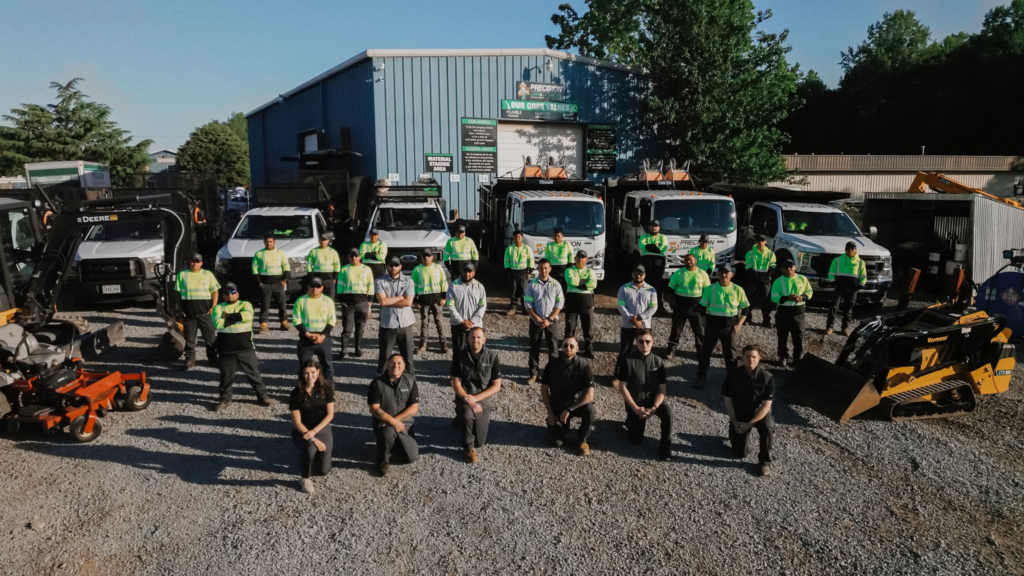
At Precision Lawn & Landscape, we provide comprehensive residential lawn care services for properties throughout Northern Virginia. Our team understands that maintaining healthy turf requires more than routine mowing, which is why we offer services designed to address soil health, turf density, weeds, seasonal stress, and other common lawn concerns.
Our professional lawn aeration services use core aeration techniques that remove plugs of soil to relieve compaction and improve conditions around the grass roots. We can pair aeration with our professional overseeding services to introduce new grass seed and help thin lawns develop thicker, more consistent turf.
By coordinating these treatments at the appropriate time of year, we can help homeowners address both the underlying soil conditions and the visible quality of their lawns as part of a more complete lawn care strategy.
Build a Thicker, Healthier Lawn With Precision Lawn & Landscape
Improving a thin or struggling lawn often requires looking beneath the grass itself. Compacted soil can restrict root development, while declining turf leaves gaps that make a lawn look uneven and vulnerable. The core aeration and overseeding process addresses both challenges by creating better growing conditions below the surface and adding new grass above it.
When scheduled at the right time and followed by proper care, these two services can work together to promote denser turf, stronger roots, and a healthier overall lawn.
If your Northern Virginia lawn is compacted, thinning, or struggling to recover from seasonal stress, contact Precision Lawn & Landscape today for a free quote. Our team can help determine whether core aeration, overseeding, or a combination of both services is the right approach for creating a thicker and healthier lawn.
FAQs
Core aeration creates openings in the soil that can improve seed-to-soil contact after overseeding. This gives new grass seed a better opportunity to access moisture and establish within the existing lawn.
Fall is often an ideal time because cooler temperatures create less stress on the lawn while grass is still actively growing. In Northern Virginia, aeration and overseeding are commonly scheduled from September through October, with services beginning to slow in November.
The ideal schedule depends on soil compaction, turf condition, traffic, and other lawn-specific factors. Lawns with heavy use or compacted soil may benefit from more regular aeration and overseeding than lawns with healthy, loose soil.
Germination time varies depending on the grass variety, soil temperature, moisture, and weather conditions. Some grass may begin appearing within a couple of weeks, while full establishment and noticeable thickening can take longer.