A healthy lawn starts below the surface. When soil becomes tightly packed, grass roots can struggle to access the air, water, and nutrients they need, potentially leading to thinning turf, poor drainage, and weak growth. For homeowners wondering how to fix compacted soil, core aeration is one of the most effective lawn care methods for loosening the soil and creating better growing conditions. Understanding how to fix soil compaction with proper aeration can help you develop deeper roots, improve water movement, and establish a thicker, healthier lawn over time.
How to Tell if Your Lawn Has Compacted Soil
Soil compaction is not always obvious from looking at the ground itself. Instead, homeowners often notice its effects on the grass growing above it.
Common signs of compacted soil include:
- Thin or patchy grass: Roots may have difficulty spreading through dense soil.
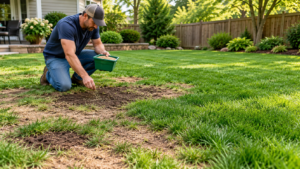
- Bare areas: Severe compaction can make it difficult for grass to establish at all.
- Standing water: Rain or irrigation may pool on the surface because it cannot infiltrate the soil efficiently.
- Excessive runoff: Water may travel across the lawn rather than soaking into the root zone.
- Hard ground: The lawn may feel unusually firm when you walk across it.
- Shallow grass roots: Roots may remain concentrated near the surface instead of extending deeper into the soil.
- Increased stress during dry conditions: Grass with limited root development can have difficulty accessing moisture deeper underground.
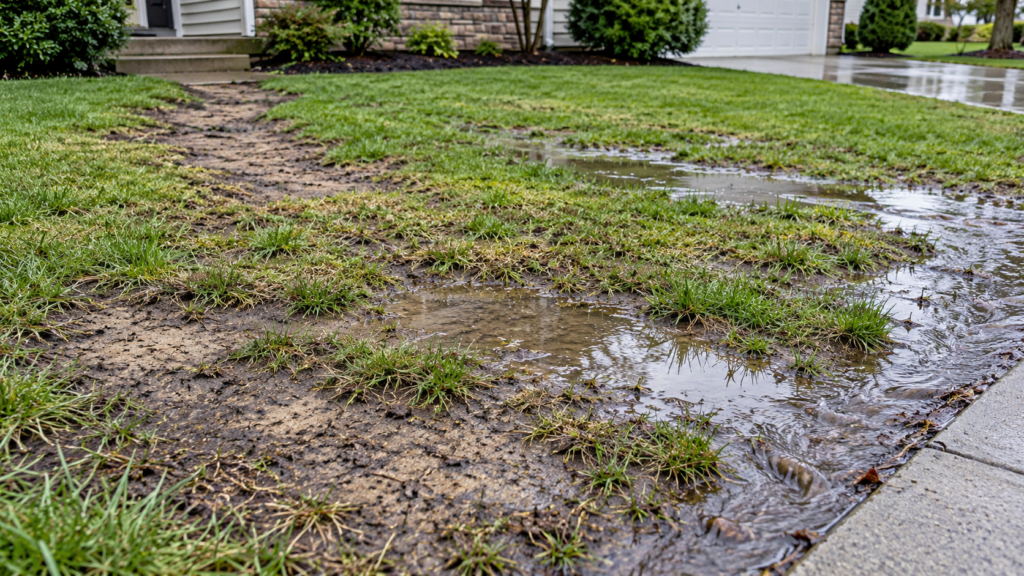
Precision Lawn & Landscape notes that compacted areas may remain hard even after rainfall and can develop puddling rather than properly absorbing water. High-traffic areas are especially susceptible.
If these symptoms appear repeatedly despite proper watering, mowing, and fertilization, compaction may be contributing to the problem.
Why Soil Compaction Is a Problem for Your Lawn
Learning how to fix soil compaction is important because healthy turf depends heavily on what happens beneath the grass blades.
Compaction Restricts Root Development
Grass roots need room to grow downward and outward. When soil particles are packed tightly together, roots encounter greater resistance and may remain shallow.
A shallow root system can make grass more vulnerable to heat, drought, foot traffic, and other environmental stresses.
Water Has Trouble Reaching the Root Zone
Dense soil can prevent rainfall and irrigation from soaking evenly into the ground. Instead, water may collect at the surface or run off into nearby landscaping and hardscapes.
Improving the soil structure gives moisture additional pathways into the root zone.
Roots Receive Less Oxygen
Grass roots require oxygen as part of their normal biological processes. Soil compaction reduces the air-filled spaces within the ground, which can limit the amount of oxygen available around the roots.
Nutrients May Be Less Accessible
Fertilizer is most useful when nutrients can move into the soil where roots can absorb them. Improving soil permeability helps create conditions where water and nutrients can reach the root system more effectively.
How to Fix Compacted Soil With Core Aeration
For established lawns, core aeration is one of the most practical answers to how to fix compacted soil without removing the existing turf.
Core aeration involves using specialized equipment to remove small plugs, or cores, of soil and thatch from the lawn. Removing these plugs creates thousands of openings throughout the turf.

These openings help reduce soil density while giving:
- Air more direct access to the root zone
- Water additional pathways into the soil
- Nutrients better access to grass roots
- Existing roots more room to expand
- New grass seed better opportunities for soil contact
Precision Lawn & Landscape uses aeration equipment that pulls plugs of soil from the lawn, helping loosen compacted areas and creating pathways for air, moisture, and nutrients to reach the grass roots.
Rather than simply treating symptoms visible above ground, core aeration targets the physical soil conditions contributing to weak turf.
How the Core Aeration Process Works
The aeration process is relatively straightforward, but each stage plays an important role in improving growing conditions.
1. Evaluate the Lawn
The lawn should first be examined for signs of compaction, turf stress, drainage concerns, and areas receiving especially heavy traffic.
Some portions of a property may be considerably more compacted than others.
2. Remove Cores From the Soil
A core aerator travels across the lawn and mechanically removes small plugs of soil.
Unlike methods that simply poke holes into the ground, core aeration physically removes material. This gives the surrounding soil additional room and helps relieve compaction.
3. Leave the Soil Plugs on the Lawn
The plugs scattered across the grass immediately after aeration may look unusual, but there is generally no need to remove them.
They can be left on the lawn to break apart and naturally return soil and organic material to the turf. Precision Lawn & Landscape incorporates this approach into its core aeration process.
4. Allow the Lawn to Recover
The holes created during aeration gradually close as the lawn grows and the soil settles. During that period, roots have an opportunity to take advantage of the improved soil environment.
How Core Aeration Can Improve Root Growth
One of the biggest reasons to correct compaction is to create better conditions for root development.
When soil is dense, roots may spread horizontally near the surface because penetrating deeper layers requires too much resistance. Aerating the lawn helps create additional space within the root zone.
Over time, stronger root development can help grass:
- Access water deeper in the soil
- Utilize available nutrients
- Recover from everyday stress
- Better tolerate periods of dry weather
- Maintain denser growth
Aeration should not be viewed as an instant transformation. Instead, it improves the environment in which grass can grow, allowing proper watering, fertilization, mowing, and other lawn care practices to become more effective.
How Core Aeration Helps Improve Lawn Drainage
If water regularly collects on your grass after rainfall, compaction may be limiting infiltration.
Core aeration creates openings through the tightly packed upper layer of soil, providing additional routes for rain and irrigation to enter the ground rather than simply remaining on the surface.
Better infiltration can help reduce minor compaction-related problems such as:
- Surface puddling
- Water running off sloped portions of the lawn
- Uneven moisture distribution
- Grass drying quickly because water is not entering the root zone
However, aeration is not a solution for every type of drainage problem. Persistent standing water caused by grading, low areas, groundwater, or inadequate drainage infrastructure may require other landscape or drainage improvements.
Combine Core Aeration With Overseeding for Thicker Grass
Correcting compacted soil creates an excellent opportunity to improve turf density at the same time.
After core aeration, the lawn contains numerous openings where grass seed can reach the soil instead of sitting entirely on top of existing turf and thatch. This is why core aeration and overseeding are frequently performed together.
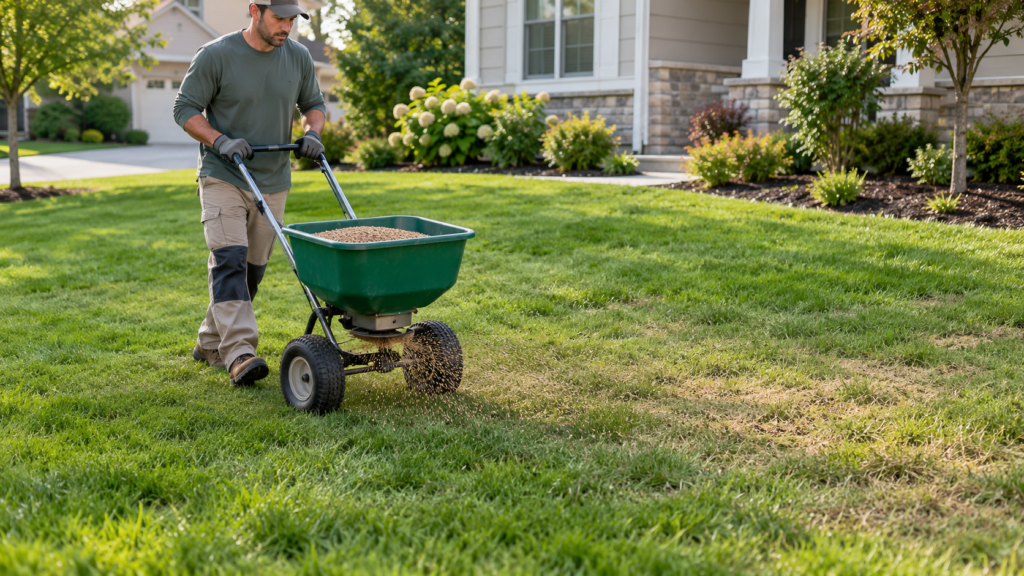
Overseeding introduces new grass plants into thin or bare portions of an established lawn. Combined with aeration, it can help homeowners:
- Fill thinning areas
- Increase overall turf density
- Establish new grass where existing turf has declined
- Improve seed-to-soil contact
- Encourage a more uniform lawn
This combination is particularly useful when soil compaction has already resulted in thin patches or weakened turf.
Aeration addresses the conditions beneath the lawn while overseeding helps improve what grows above it.
When Is the Best Time to Aerate a Lawn in Northern Virginia?
Timing is an important part of learning how to fix compacted soil without placing unnecessary stress on the grass.
Precision Lawn & Landscape offers core aeration in both the spring and fall, but fall is generally the preferred time. Cooler conditions place less stress on the lawn and provide favorable conditions for turf recovery.
The company’s fall aeration schedule begins in September, continues through October, and tapers off during November. According to Precision Lawn & Landscape, this period is when lawns are typically strongest and most receptive to the aeration process.
Fall is also an ideal time to coordinate aeration with overseeding for many Northern Virginia lawns, especially where cool-season turf needs to recover from summer stress.
How to Prevent Soil From Becoming Severely Compacted Again
Core aeration can relieve existing compaction, but reducing the amount of pressure placed on the lawn can help preserve the improvement.
Consider these practices:
- Redirect frequent foot traffic onto sidewalks, paths, or stepping stones.
- Avoid driving or parking vehicles on the lawn.
- Change mowing patterns periodically.
- Minimize heavy traffic when the soil is saturated.
- Move outdoor furniture, play equipment, and other items periodically.
- Maintain healthy turf so bare areas do not become frequently traveled shortcuts.
- Incorporate aeration into an ongoing lawn care plan when compaction is a recurring issue.
Some lawns naturally compact more readily than others, meaning aeration may need to become a regular part of their maintenance program rather than a one-time treatment.
Does Every Lawn Need Core Aeration?
Not every lawn experiences compaction to the same degree. However, aeration can be especially beneficial for lawns with high foot traffic, poor infiltration, thinning turf, shallow roots, or heavy soil.
Northern Virginia properties can also experience challenging soil conditions. Precision Lawn & Landscape specifically identifies clay soil and compaction among the regional lawn issues its team encounters.
If the ground is consistently hard, water struggles to penetrate the surface, or grass repeatedly thins in high-traffic areas, an evaluation can help determine whether core aeration should be incorporated into the lawn’s maintenance plan.
Comprehensive Residential Lawn Care From Precision Lawn & Landscape
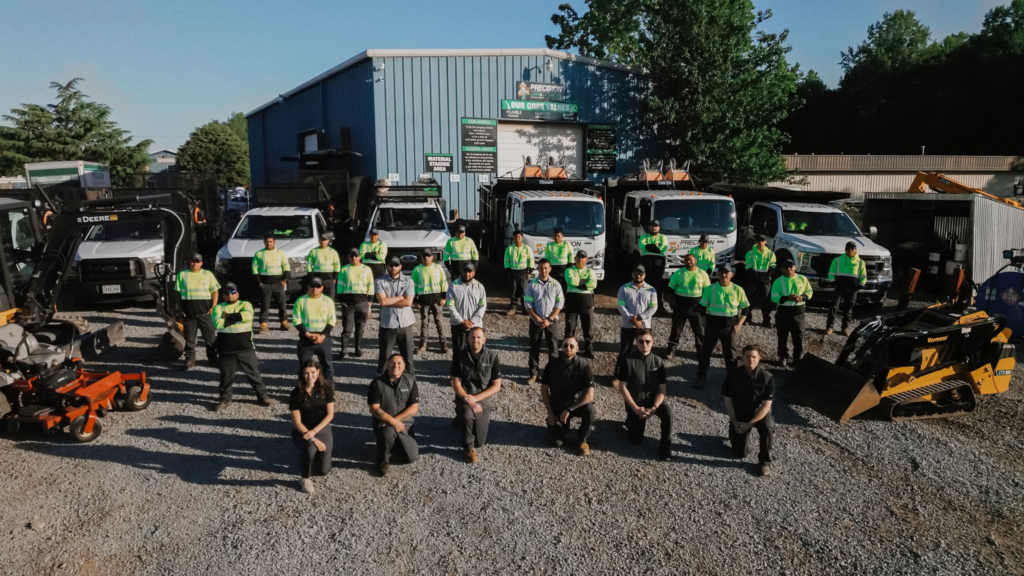
At Precision Lawn & Landscape, we provide comprehensive residential lawn care services designed to address the challenges that affect properties throughout Northern Virginia. Our team understands regional grass varieties, seasonal weather patterns, soil conditions, weeds, pests, and other factors that can influence the appearance and long-term health of your lawn. Our broader services include lawn care and maintenance solutions that help homeowners maintain healthier, more attractive outdoor spaces throughout the year.
For lawns affected by compacted soil and thinning grass, our lawn aeration services use core aeration techniques to remove plugs of soil and create pathways for water, oxygen, and nutrients. We can also pair aeration with our overseeding services to help introduce new grass into thin areas and encourage a thicker lawn. With a coordinated approach to aeration, overseeding, and ongoing lawn care, we can address both the soil conditions beneath your turf and the grass growing above it.
Fix Compacted Soil and Give Your Lawn Room to Grow
Knowing how to fix soil compaction is an important step toward developing thicker grass, stronger roots, and better-performing soil. Core aeration directly addresses dense soil by removing plugs from the ground, opening the root zone, and creating better pathways for air, water, and nutrients. When paired with overseeding and a comprehensive lawn care program, aeration can provide the foundation your turf needs for healthier long-term growth.
If your Northern Virginia lawn feels hard, drains poorly, or has become thin and patchy, contact Precision Lawn & Landscape today for a free quote. Our team can help determine whether core aeration, overseeding, or other residential lawn care services are appropriate for your property and develop a plan to help your lawn reach its full potential.
FAQs
One of the most effective ways to fix compacted soil in an established lawn is with core aeration. Core aeration removes small plugs of soil, helping create more space for air, water, nutrients, and grass roots to move through the soil.
The ideal aeration schedule depends on your soil type, lawn traffic, and the severity of the compaction. Lawns with heavy clay soil or frequent foot traffic may benefit from core aeration on a recurring basis as part of an ongoing lawn care plan.
Core aeration can be performed in both spring and fall, but fall is generally the preferred time for many Northern Virginia lawns. Cooler temperatures reduce stress on the grass and can create favorable conditions for recovery and overseeding.
Some benefits, such as improved water movement into the soil, can begin soon after aeration, while changes in turf density and root development take longer. Results are typically more noticeable when aeration is paired with proper watering, fertilization, overseeding, and regular lawn maintenance.