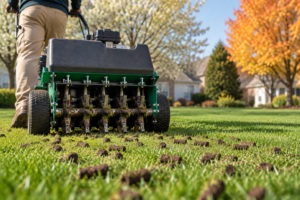
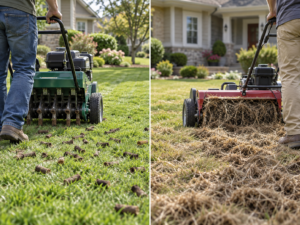
Over time, foot traffic, lawn equipment, heavy soil, and everyday use can compact the ground beneath your grass, making it more difficult for roots to access the air, water, and nutrients they need. Lawn aeration helps relieve this compaction and creates better growing conditions, but timing the service correctly is important.
The best time of year to aerate lawn depends largely on your grass type, local climate, soil conditions, and the amount of stress your lawn is experiencing. For many lawns in Northern Virginia, fall offers the most favorable conditions for core aeration because temperatures are cooler, grass is actively growing, and the lawn has time to recover before winter. Understanding when and why to aerate can help you get more value from the service and encourage stronger, healthier turf.
Why Does the Time of Year Matter for Lawn Aeration?
Core aeration temporarily creates openings throughout the lawn by removing small plugs of soil and thatch. While this process benefits the lawn over time, it also creates a short period during which the grass needs to recover.
That is why aeration is generally most effective when grass is actively growing rather than dormant or already stressed by extreme heat, drought, or cold. Aerating during an active growth period allows roots and grass plants to take advantage of improved access to moisture, oxygen, and nutrients while recovering more quickly from the process.
Choosing the best time to aerate lawn can also improve the effectiveness of other lawn care services performed around the same time, including overseeding and fertilization.
What Is the Best Time of Year to Aerate Lawn?
For most cool-season lawns found throughout Northern Virginia, fall is generally the best time of year to aerate your lawn. September and October typically provide an ideal combination of cooler temperatures, active grass growth, and favorable soil conditions.
Fall aeration can help lawns recover from the stress and soil compaction that often build up throughout summer. It can also prepare the root system for stronger development heading into winter and the following spring.
At Precision Lawn & Landscape, we offer core aeration during both the spring and fall, but fall is typically the preferred season. Our fall aeration season begins in September, continues through October, and begins slowing down in November as temperatures drop and the growing season winds down.
Why Fall Is the Best Time to Aerate Lawn in Northern Virginia
Northern Virginia lawns experience significant seasonal changes. Summer can bring high temperatures, periods of limited rainfall, increased foot traffic, and other conditions that leave soil compacted and grass stressed.
By early fall, temperatures begin to cool while the soil often remains warm enough to support root development. These conditions make fall an excellent time to relieve compaction and give the lawn an opportunity to recover.
Some of the main advantages of fall core aeration include:
- Reduced heat stress: Cooler temperatures place less stress on grass during recovery.
- Active root growth: Cool-season grasses are typically growing vigorously during fall.
- Improved soil conditions: Moderately moist soil allows core aeration equipment to remove effective soil plugs.
- Better nutrient availability: Aeration helps water, oxygen, and nutrients move deeper into the root zone.
- Improved overseeding results: Openings created through aeration can improve seed-to-soil contact when overseeding is performed.
- Preparation for winter: A stronger root system helps grass enter dormancy in better condition.
For homeowners wondering when is the best time to aerate your yard in Northern Virginia, September through October is usually the strongest window.
Can You Aerate Your Lawn in the Spring?
Yes. Spring can also be an appropriate time for core aeration, particularly when a lawn is noticeably compacted or needs additional help recovering from winter.
As temperatures warm and grass begins actively growing again, spring aeration can improve access to the resources roots need. It may be especially beneficial for lawns with heavy soil, significant foot traffic, drainage issues, or visibly compacted areas.
However, fall is generally preferred when homeowners can choose between the two seasons. Spring lawns are beginning a long growing season that will eventually include summer heat, while fall lawns typically have cooler conditions that make recovery easier.
Spring aeration can still be useful when:
- The lawn has severe soil compaction.
- Water regularly pools or runs off instead of soaking into the soil.
- Grass growth is weak or uneven.
- The property experiences significant foot or equipment traffic.
- The lawn did not receive aeration during the previous fall.
Should You Aerate Your Lawn in the Summer?
Summer is usually not the best time to aerate lawn, particularly for cool-season grasses.
High temperatures and dry conditions can already place considerable stress on a lawn. Core aeration during these conditions may add unnecessary stress at a time when grass is focused more on survival than vigorous growth.
Summer soil may also become extremely dry and hard, making it more difficult for aeration equipment to remove proper cores.
Unless there is a specific lawn care reason for doing otherwise, homeowners with cool-season grass are usually better off waiting until early fall.
Is Winter a Good Time for Lawn Aeration?
Winter is generally not recommended for lawn aeration in Northern Virginia.
Grass growth slows significantly or enters dormancy as temperatures fall. Because the lawn is no longer actively growing, it cannot recover from aeration as efficiently as it can during spring or fall.
Frozen or excessively cold soil can also make effective core removal difficult or impossible. Scheduling aeration during the active growing season produces far better conditions for lawn recovery and root development.
The Best Time to Aerate Lawn Depends on Your Grass Type
Grass type is one of the most important considerations when deciding when to aerate.
Cool-Season Grasses
Cool-season grasses perform most of their active growth during cooler periods of the year. Common varieties may include tall fescue, Kentucky bluegrass, and perennial ryegrass.
For these lawns, early fall is typically the preferred aeration period. Spring is another option when additional aeration is needed.
Warm-Season Grasses
Warm-season grasses such as Bermuda grass and zoysia grow most aggressively during warmer weather.
These lawns are generally best aerated during late spring or early summer, when the grass is actively growing and capable of recovering rapidly.
Because many Northern Virginia lawns use cool-season grasses, fall remains the most common answer when homeowners ask about the best time of year to aerate lawn in the region.
How Soil Type Affects When You Should Aerate
The condition and composition of your soil can influence both how frequently you need aeration and when the service should be performed.
Northern Virginia is known for areas with dense clay soil. Clay particles can pack closely together, restricting the movement of air and water through the root zone. Lawns growing in these conditions may benefit significantly from routine core aeration.
Soil moisture also matters. Ideally, the ground should be moist enough for an aerator to penetrate deeply and remove intact plugs, but it should not be excessively wet or muddy.
Aerating extremely dry soil can limit penetration, while working on saturated soil may cause additional compaction or damage.

Signs Your Lawn May Be Ready for Core Aeration
Seasonal timing is important, but lawn conditions can also tell you when aeration may be necessary.
You may want to schedule core aeration if you notice:
- Hard or tightly packed soil
- Thin or weak grass growth
- Bare or worn areas
- Water pooling on the lawn
- Water running off instead of soaking into the ground
- Heavy foot traffic across the property
- Difficulty pushing a screwdriver or similar object into the soil
- A lawn that dries out unusually quickly
- Poor performance despite proper watering and fertilization
Homes with children, pets, outdoor entertaining areas, or frequent lawn equipment traffic may develop compaction more quickly than lightly used lawns.
How Core Aeration Improves Lawn Health
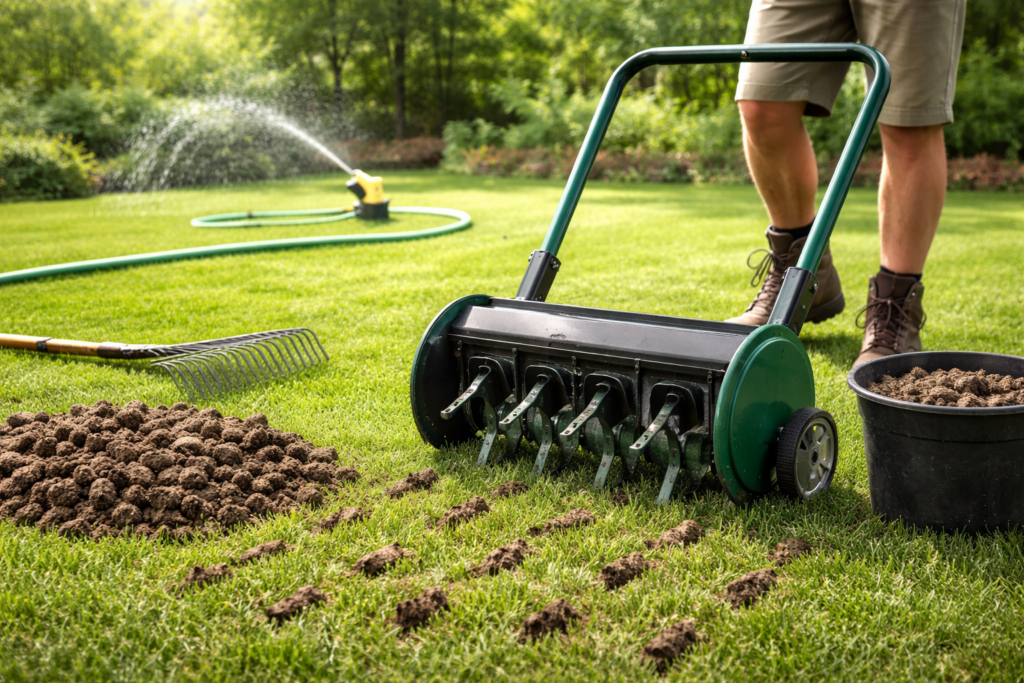
Core aeration uses specialized equipment to pull small plugs of soil from the lawn rather than simply punching holes into the ground. Removing these cores creates temporary channels through compacted soil.
These openings can improve the movement of air, moisture, and nutrients toward the roots while giving the surrounding soil room to loosen.
Core aeration can help:
- Reduce soil compaction
- Improve root development
- Increase oxygen movement through the soil
- Help water penetrate the root zone
- Improve nutrient absorption
- Encourage thicker turf growth
- Improve conditions for overseeding
- Reduce excessive thatch buildup over time
The soil plugs left behind after core aeration should generally remain on the lawn. They naturally break down and return beneficial organic material to the soil.
How Often Should You Aerate Your Lawn?
Many residential lawns benefit from core aeration approximately once per year, especially when they grow in compacted or clay-heavy soil.
Lawns with relatively loose soil and minimal traffic may not require aeration as frequently. Conversely, heavily used properties or lawns with significant compaction problems may benefit from more frequent attention.
Rather than relying solely on a fixed schedule, homeowners should consider grass health, soil density, water absorption, traffic levels, and overall growing conditions when deciding how frequently to aerate.
Professional Core Aeration in Northern VA from Precision Lawn & Landscape
At Precision Lawn & Landscape, we provide comprehensive residential lawn care services throughout Northern VA designed to help homeowners create stronger, healthier, and more attractive lawns. Our lawn care approach considers the seasonal needs of your grass and the conditions affecting the soil beneath it.
Our professional lawn aeration services use core aeration techniques to remove plugs of compacted soil and create pathways that improve access to air, water, and nutrients. While we offer core aeration during both spring and fall, we generally recommend fall as the preferred season for cool-season lawns because the cooler weather creates excellent conditions for recovery and continued root development.
Beginning in September and continuing through October, our fall aeration services can help Northern Virginia homeowners address summer soil compaction while preparing their lawns for stronger future growth.

Give Your Lawn a Stronger Start With Professional Core Aeration
The best time of year to aerate lawn depends on grass type, soil conditions, and climate, but for most cool-season lawns in Northern Virginia, fall is the ideal choice. Scheduling core aeration in September or October allows your lawn to take advantage of cooler temperatures, active growth, and favorable recovery conditions before winter arrives.
If your lawn feels compacted, struggles to absorb water, or simply needs help developing stronger roots, Precision Lawn & Landscape is ready to help. Contact Precision Lawn & Landscape today for a free quote on professional lawn aeration services in Northern VA and give your lawn the conditions it needs to grow thicker, healthier, and stronger.
FAQs
For cool-season lawns, fall is generally the best time of year to aerate lawn because temperatures are cooler and grass is actively growing. In Northern Virginia, September through October is typically an ideal window for core aeration.
Common signs include compacted soil, thinning grass, standing water, excessive runoff, and difficulty pushing a screwdriver into the ground. Lawns that receive frequent foot traffic or grow in heavy clay soil may also need aeration more regularly.
Many residential lawns benefit from core aeration once per year, especially when the soil is compacted or clay-heavy. Lawns with loose soil and minimal traffic may need aeration less frequently.
Summer is generally not the best time to aerate lawn because heat and dry conditions can place additional stress on the grass. For cool-season lawns, it is usually better to wait until early fall when growing conditions improve.