Key Takeaways
- Heat stress in Northern Virginia lawns typically appears June through August as footprints that linger, blue-gray grass blades, and brown patches in sunny areas.
- Most “dead” summer lawns are actually in summer dormancy and can recover with proper deep, infrequent watering and gentle mowing practices.
- Practical actions include applying 1 inch of water per week in 2–3 early morning sessions, using your highest mower setting, and reducing traffic on stressed areas.
- Precision Lawn & Landscape offers professional summer lawn care and irrigation-adjustment services in Woodbridge, Manassas, Dumfries, and surrounding Northern Virginia communities.
What Is Heat Stress in a Lawn?
When high temperatures and dry weather combine for prolonged periods, your turf enters a state of heat stress. This occurs when air temperatures consistently exceed 85–95°F while soil moisture drops faster than roots can absorb water. In Northern Virginia, this most often happens from late June through early September during multi-day heat waves.
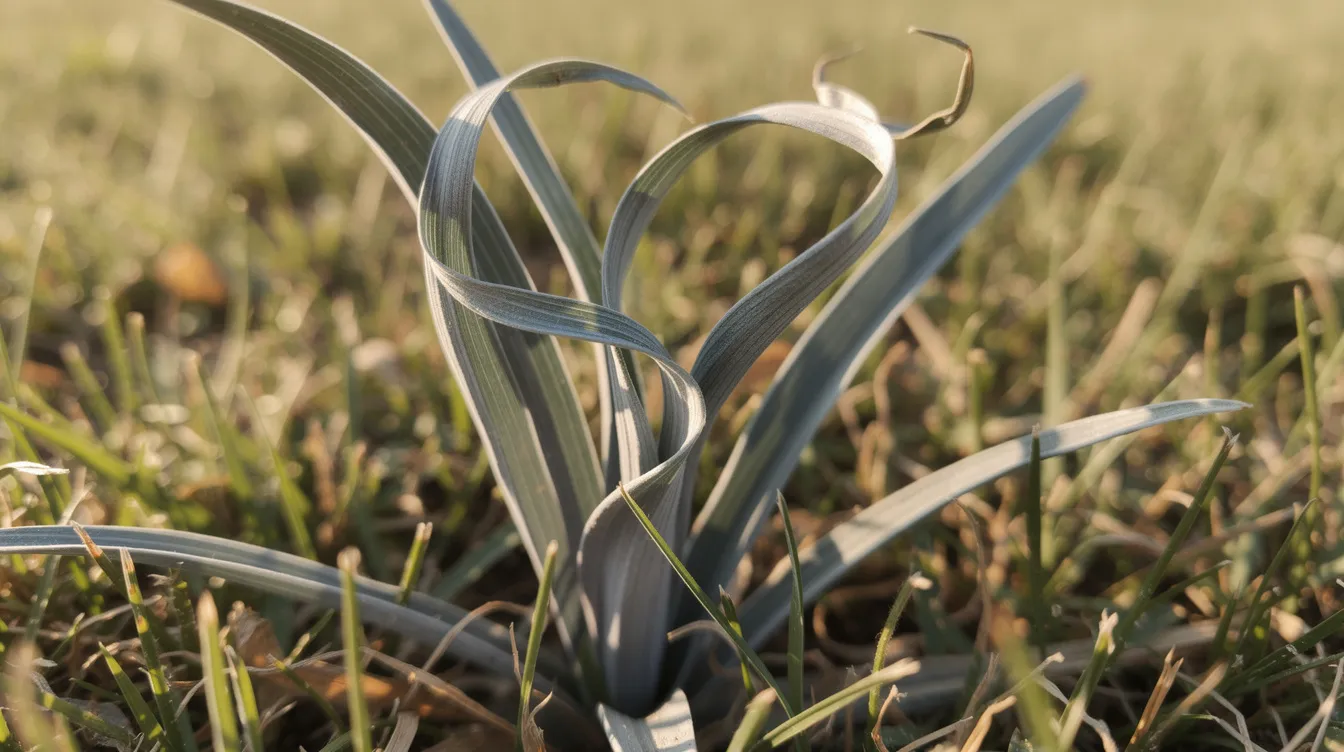
Cool season lawns common in our region—Kentucky bluegrass, perennial ryegrass, and tall fescue—thrive in the 60–75°F range. Once temperatures climb above 80–85°F, grass growth slows dramatically and the plant redirects energy from growth to survival. Unlike diseases that create irregular lesion patterns, heat stress starts as wilting and a dull blue-gray color before shifting to tan or brown if conditions persist.
The science is straightforward: hot soil, intense sun, and summer wind can pull moisture from the plant through transpiration faster than even healthy roots can replace it. Surface soil temperatures can reach 100–120°F on exposed areas, essentially cooking shallow root systems and leaving your lawn unable to retain moisture.
How to Spot Heat and Drought Stress Early
Early detection is the best way to prevent heat stress from turning small warning signs into large dead-looking patches. Notice these indicators before they spread:
- Color changes: Look for blue-gray or dull green areas rather than vibrant green; this signals the plant is closing its stomata to conserve water
- Blade behavior: Grass blades folding, curling, or rolling inward indicate the plant is reducing surface area to slow moisture loss
- Location patterns: Hot spots appear first on south- and west-facing slopes, along driveways and sidewalks, and near hardscape that reflects heat
- The footprint test: Walk across your lawn in the afternoon; if footprints remain visible for 30 minutes or more instead of springing back within a few minutes, you have significant turgor loss
- The screwdriver test: Try pushing a flat-head screwdriver 4–6 inches into soil dry areas—if it won’t go easily, compaction and drought are limiting root access to moisture
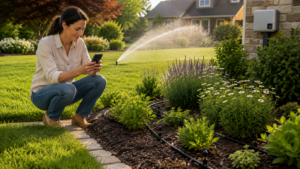
- Irrigation gaps: Check around sprinkler heads for uneven coverage; stressed patterns often mirror poor watering distribution from clogged or misaligned heads
Is It Heat Stress, Dormancy, or Dead Grass?
Many Northern Virginia homeowners assume brown summer grass is dead when it’s often just dormant. Understanding the difference saves money and prevents unnecessary panic.
Summer dormancy is a survival mechanism. After 2–3 weeks of heat and drought stress, cool-season grasses shut down visible growth, turn tan, and focus energy on keeping crowns and roots alive. This is natural and reversible.
The tug test: Gently pull a handful of brown grass. If it resists and remains firmly anchored with pliable roots, it’s likely dormant or stressed—not dead. If it pulls up easily with dry, brittle roots under 2 inches, that area may be dead.
Even dormant lawns need about ½ inch of water every two weeks to keep crowns viable. Dead turf from extreme heat, chinch bugs, grubs, or diseases often shows bare spots, crumbly roots, and will need reseeding or sodding in early fall.
If you’re unsure whether your lawn is dormant or dead, calling Precision Lawn & Landscape for an evaluation can save you from investing in seed or irrigation changes that won’t help.
Immediate Steps to Help a Heat-Stressed Lawn
Stressed lawns can often recover in 2–4 weeks with consistent care. Here’s how to help your lawn withstand heat stress starting this week:
- Water deeply and infrequently: Apply about 1 inch of water per week, spread over 2–3 early morning sessions (0.35–0.5 inches on Tuesday, Thursday, and Sunday between 4–8 a.m.)
- Measure your irrigation: Place several straight-sided containers like tuna cans around your yard during watering to calibrate how long your sprinkler system needs to run
- Raise your mower: Set blades to the highest setting (3.5–4 inches for cool-season grasses) to shade the soil and encourage deep root development
- Follow the one-third rule: Never remove more than one-third of blade height in a single mowing—don’t cut from 6 inches down to 2 inches in one pass
- Postpone fertilizer: Skip high-nitrogen feeding from mid-June through mid-August; it forces growth the stressed plant cannot support
- Reduce traffic: Minimize foot traffic, play equipment, and pet activity on visibly wilted or brown areas until resilience improves
- Adjust watering schedule for efficiency: For commercial properties, Precision Lawn & Landscape can reset irrigation controllers, identify coverage gaps, and adjust mowing schedules to match heat conditions
Long-Term Strategies to Prevent Heat Stress
Building a lawn that can handle summer heat requires preparation before the heat wave arrives.
- Select heat-tolerant grass: Tall fescue blends and turf-type tall fescue offer 20–30% better heat tolerance than pure Kentucky bluegrass, with roots reaching 8–12 inches compared to 6 inches for bluegrass
- Aerate in fall: Core aeration in September–October relieves compaction and improves infiltration by up to 50%, helping roots grow deeper before the next summer
- Build organic matter: Annual topdressing with compost and leaving grass clippings on the lawn creates natural mulch that helps soil retain moisture
- Maintain your irrigation system: Calibrate and check for clogged heads, misaligned nozzles, and low-pressure zones each spring to prevent uneven watering that leads to stress patterns
- Add strategic shade: Planting trees on western and southern property edges can reduce late-afternoon sun exposure and radiated heat from hardscape
- Adjust summer mowing: Mow less frequently, avoid the hottest part of the day, and keep blades sharp to minimize tearing and water loss
- Consider professional maintenance plans: Precision Lawn & Landscape offers seasonal programs covering spring prep, summer monitoring, and fall renovation
Common Mistakes That Make Heat Stress Worse
Well-intentioned homeowners often accidentally wreak havoc on already struggling lawns. Avoid these errors:
- Daily shallow watering: Applying 0.1–0.2 inches daily trains roots to stay near the hot surface rather than growing deep where moisture persists
- Scalping during heat: Lowering the mower deck to “clean things up” exposes soil, increases evaporation, and can damage crowns
- Summer fertilizing: Applying heavy nitrogen in July burns roots and forces thin, weak growth the plant can’t sustain
- Using herbicides on stressed turf: Many weeds killers specify avoiding use above 85°F; ignoring this causes additional injury
- Ignoring early signs: Waiting weeks then trying aggressive fixes like dethatching during a heat wave compounds damage
- Evening watering: Running sprinklers at night leaves blades wet overnight, increasing disease risk when plants are already vulnerable
How Precision Lawn & Landscape Helps Heat-Stressed Lawns in Northern Virginia
Precision Lawn & Landscape is a local, full-service lawn care and landscaping company serving Woodbridge, Manassas, Dumfries, and surrounding Northern Virginia communities. Our team understands the specific challenges hot weather creates for cool-season lawns in this region.
- Midsummer assessments: We inspect for heat and drought stress, check irrigation coverage, evaluate soil moisture, and identify compacted or shallow-rooted areas
- Residential services: Heat-conscious mowing schedules, irrigation timer adjustments, spot-watering recommendations, and summer-safe nutrient programs tailored to your lawn
- Commercial property care: Monitoring high-traffic entryways, medians, and parking-lot-adjacent turf, plus coordinating with property managers around business hours
- Fall renovation: Core aeration, overseeding with drought-tolerant fescue varieties, topdressing, and soil amendments to boost water-holding capacity after severe stress
- Satisfaction guarantee: Every lawn receives a property-specific evaluation rather than a generic one-size-fits-all prescription
Contact Precision Lawn & Landscape for a summer lawn assessment before the next heat wave. Call 703-493-1811 to discuss your lawn care needs.hern Virginia. Contact us to schedule an evaluation if you’re seeing new, spreading, or recurring brown spots.

FAQs
Lightly stressed lawns typically show improvement within 7–14 days once you irrigate properly and adjust mowing. Lawns that entered full dormancy during July–August may need 3–4 weeks of consistent rain or watering plus cooler temperatures to green up. If there’s no change after a month of good care, insects or diseases may require professional evaluation.
Early morning between 4–9 a.m. delivers the best results. Temperatures are cooler, wind is calmer, and more water reaches roots rather than evaporating. Avoid evening watering, which leaves grass wet overnight and increases disease pressure. Mid-day watering during an emergency is better than nothing but less efficient.
Avoid heavy feeding during peak heat (mid-June through mid-August). High-nitrogen fertilizer can burn roots and force growth the plant cannot support. Wait until late August or September when temperatures moderate. Light organic applications may be appropriate under professional guidance, but exercise caution with DIY products.
Summer is not ideal for seeding cool-season lawns. High soil temperatures and inconsistent moisture make germination difficult. Focus on stabilizing your existing lawn now, then begin overseeding in early fall (late August through September). Large bare spots may need targeted late-summer renovation with careful irrigation management.
If some areas stay green while others brown out in predictable patterns, your system likely needs coverage and timing adjustments rather than replacement. Aging systems with broken heads, poor pressure, or outdated controllers might benefit from upgrades. A professional catch-can test from Precision Lawn & Landscape can determine whether repairs or replacement makes sense.