Nothing ruins a green lawn faster than mysterious brown patches spreading across your yard. Whether you’re in Woodbridge, Manassas, or Dumfries, understanding what’s causing those unsightly spots is the first step toward restoring healthy grass. This guide covers the most common culprits behind brown spots on lawn areas in Northern Virginia and provides practical solutions you can implement today.
Key Takeaways
- Most brown spots come from fungus, insects, drought, or pet damage—each requires a different fix
- In Northern Virginia, brown patch fungus and grubs are the most common causes of mid-summer browning, especially from late June through early September
- Quick diagnostic checks (tug test, looking for rings, checking soil moisture, inspecting for pests) help narrow down the cause in a single afternoon
- Many issues can be reduced with better watering, mowing, and aeration, but stubborn or spreading patches often need professional treatment
- Precision Lawn & Landscape provides diagnosis, treatment, and ongoing lawn care programs for homes and commercial properties throughout Northern Virginia
Why Brown Spots Appear on Your Lawn
Brown spots are a symptom, not a single disease. Accurate diagnosis within the first 24-48 hours of noticing them is critical to saving turf, as many causes progress rapidly under favorable conditions. The complexity lies in the fact that multiple distinct causes can produce visually similar brown discoloration.
Common causes include drought stress, fungal diseases like brown patch, insects (especially white grubs and chinch bugs), dog urine, thatch buildup, compacted soil, and physical damage from objects left on grass. In the Mid-Atlantic climate of Northern Virginia, hot and humid conditions from late June through August accelerate both fungal problems and insect activity.
When examining spots, note these diagnostic clues:
- Size and shape (circular vs. irregular patches)
- Texture of affected area (spongy vs. firm)
- Soil moisture (dry and hard vs. wet)
- Location (sunny areas, pet zones, shaded spots)
Common Causes of Brown Spots in Northern Virginia Lawns
For quick reference, here’s a summary table of the main causes of brown spots and their distinguishing features:
| Cause | Distinguishing Features | Typical Timing/Location |
|---|---|---|
| Fungal Diseases (Brown Patch) | Circular/irregular patches, smoke ring, purplish-green to brown blades, humid weather | Summer (late June–Sept), shaded/humid |
| Insect Damage (Grubs, Chinch Bugs) | Spongy turf, grass rolls up, visible larvae, straw-colored patches, dry appearance | Late summer, sunny areas, near hardscapes |
| Drought Stress/Watering Issues | Uniform tan/straw color, dry/hard soil, half-moon or striped patterns | July–August, slopes, south-facing |
| Dog Urine/Pet Damage | Small/medium circles, brown center, dark green ring, near pet areas/fence lines | Year-round, pet zones |
| Thatch Buildup | Patchy browning, water beading, shallow roots, thick thatch layer | Where thatch >1/2 inch, infrequent mowing |
| Compacted Soil/Foot Traffic | Thin/bare patches, hard soil, puddling, near paths/play zones | High-traffic areas, near driveways |
| Shade/Obstructions | Yellow/brown under objects, thinning in shade, moss/weeds spread | Under toys, furniture, tree shade |
This section provides a cause-by-cause overview, describing what damage looks like and when it typically appears. The focus is on turf types commonly used locally, including tall fescue, kentucky bluegrass, and perennial ryegrass blends found around Woodbridge and Manassas, where many homeowners rely on professional lawn care and landscaping services.
Consider scenarios like brown spots appearing after a 3-5 day heatwave in July, or following heavy thunderstorms that create poor drainage and standing water in low spots.
Fungal Diseases (Including Brown Patch)
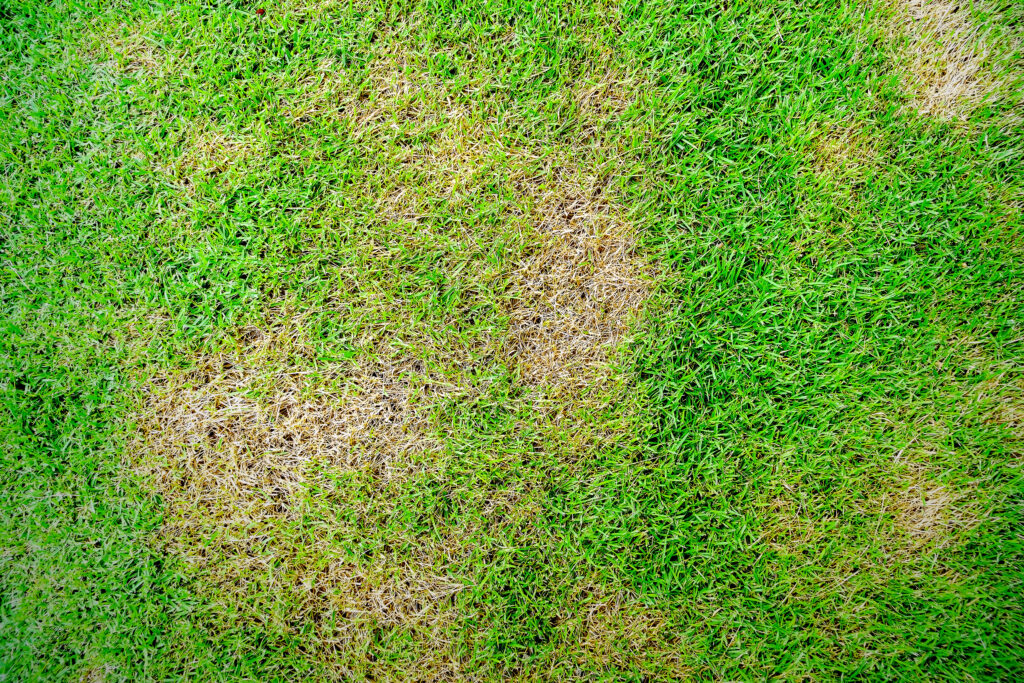
Brown patch disease caused by Rhizoctonia solani is the most common fungal threat affecting cool-season lawns during summer. This brown patch fungus thrives when nighttime temperatures stay above 65°F and daytime highs reach the 80s with humid weather.
Visual symptoms include circular or irregular patches ranging from a few inches to several feet in diameter. Early signs include grass blades turning dark purplish-green before fading to light brown. A distinctive smoke ring—a grayish mycelial band—may be visible at patch margins during early morning on close-mowed turf.
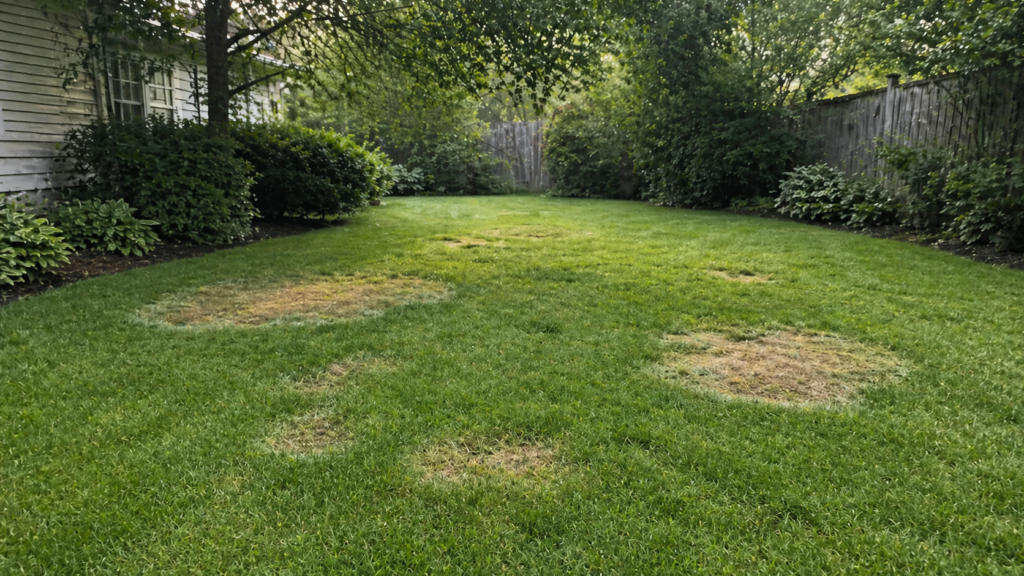
The disease can appear almost overnight after extended periods of sticky, rainy weather, especially in shaded areas with poor air movement between houses and fences. Thick thatch layers and late-day watering that keeps grass wet overnight worsen outbreaks.
Insect Damage (Grubs, Chinch Bugs & Others)
Root-feeding insects like white grubs and surface feeders like chinch bugs create expanding brown areas often mistaken for drought or fungus.
Classic grub damage signs:
- Turf turns brown in late summer
- Ground feels spongy underfoot
- Grass rolls back like loose carpet
- 5-10 white, C-shaped larvae visible per square foot when soil is peeled back
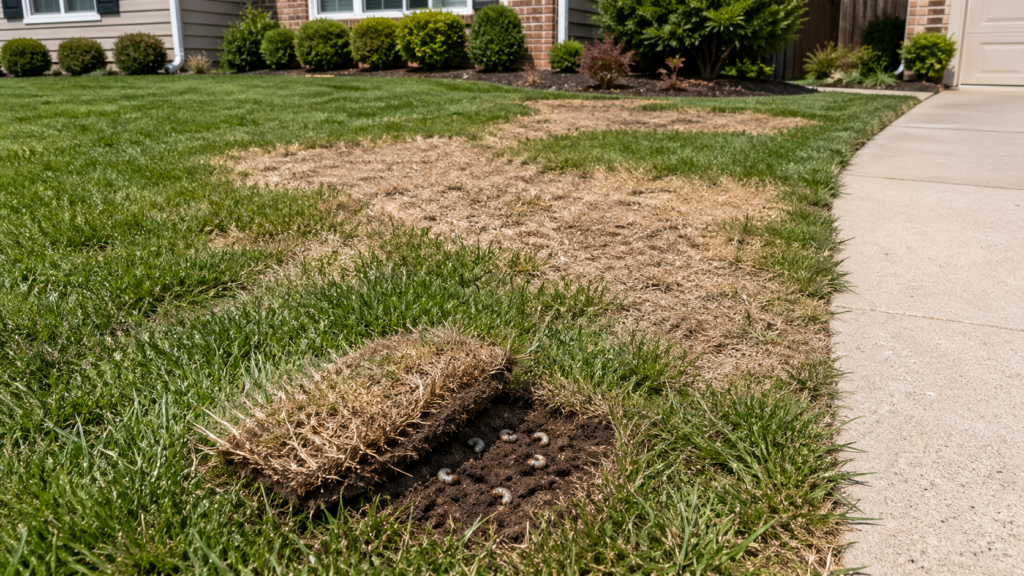
Chinch bugs create irregular, straw-colored patches with a dry, burned appearance in sunny areas near sidewalks or driveways. These patches continue to enlarge even with more water because the pests are feeding directly on grass blades.
Test by cutting a small 6×6-inch square in both damaged and healthy turf, then check the soil just below the thatch layer for active insects.
Drought Stress and Watering Issues
In July and August, tall fescue lawns often develop brown spots from lack of deep, even irrigation, particularly on slopes and south-facing areas. Many of these problems can be prevented with expert irrigation services for healthy, lush lawns. Drought-stressed grass usually turns uniformly tan or straw-colored, and the soil underneath feels dry and hard rather than soft.
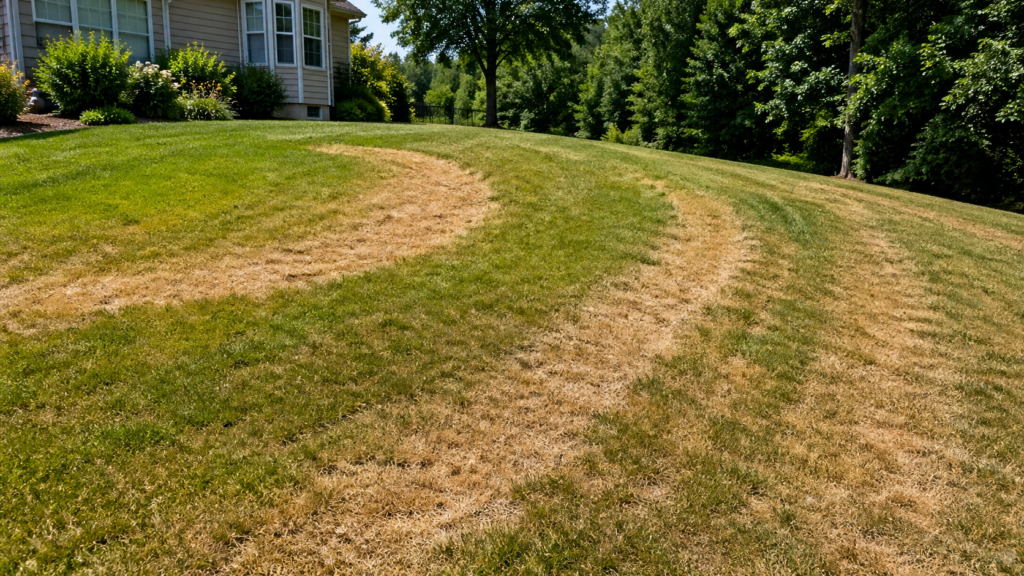
Irregular sprinkler coverage, clogged sprinkler head nozzles, or a misaligned watering system can cause distinct “half-moon” or striping patterns of brown next to green turf. Lawns need about 1-1.5 inches of water per week in summer, ideally delivered in one or two deep morning soakings.
Dog Urine and Other Pet Damage
Dog urine burns appear as small to medium circles with a brown center surrounded by a darker green, lush ring where diluted nitrogen actually fertilizes the grass. The high nitrogen content in urine causes localized burn on grass blades.
These spots tend to appear along fence lines, near patios, or in consistent pet areas. Female dogs and larger breeds often cause more visible damage because they release more concentrated urine in one place.
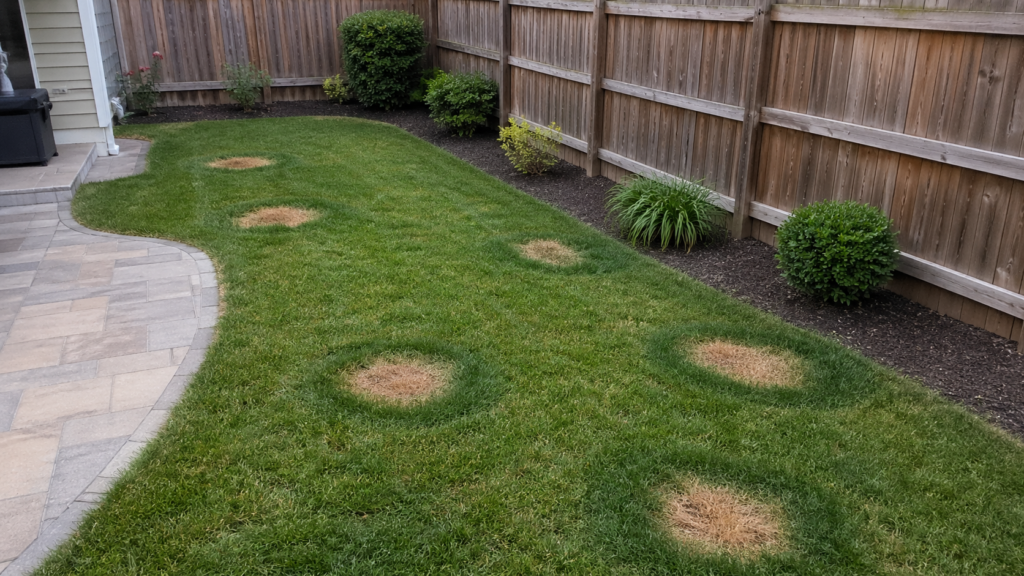
Solutions include designating a specific gravel or mulch area as a pet bathroom, watering areas immediately after the dog goes, and training for consistent use of that area.
Thatch Buildup
Thatch is a layer of undecomposed stems and roots between the green grass and the root zone in soil. When thicker than about 1/2 inch, this thatch layer repels water and harbors pests and fungus.
Symptoms include patchy browning where thatch is deepest, water beading on the surface rather than soaking in, and shallow roots that dry out quickly in heat. Lawns treated with high doses of quick-release nitrogen or mowed infrequently develop excess thatch more quickly.
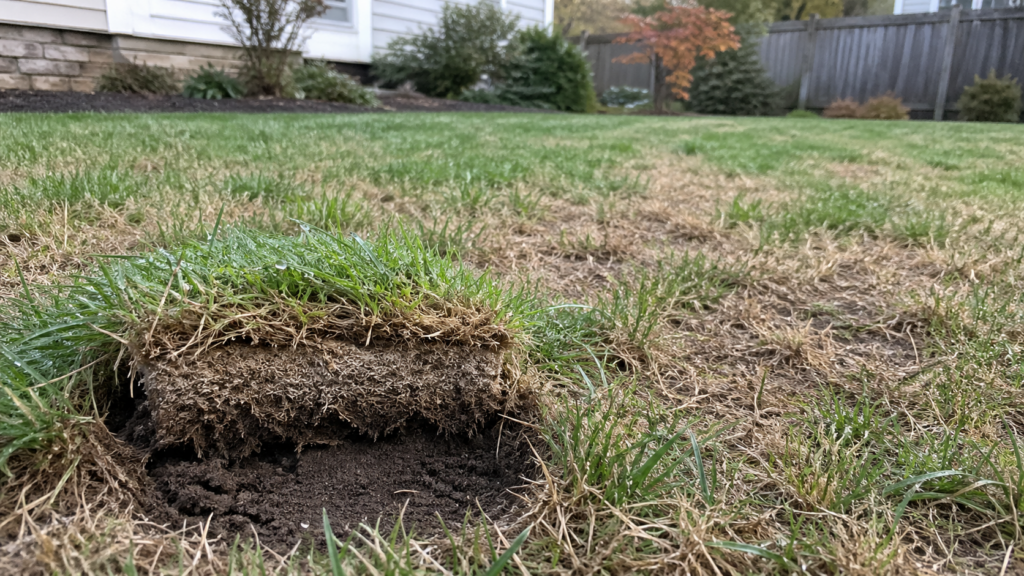
Early fall in Northern Virginia (September through early October) is the optimal time for core aeration and dethatching to restore healthy soil contact.
Compacted Soil and Heavy Foot Traffic
Areas used as play zones, sports areas, or paths to sheds often develop compacted soil that roots cannot penetrate, leading to thin turf and bare patches, which often require broader landscaping services in Northern Virginia to fully restore.
Compacted areas feel hard underfoot even after rain, tend to puddle instead of absorbing water, and often occur near driveways and backyard gathering spaces. Core aeration at least once a year helps, especially in clay-heavy soils common in Prince William County.
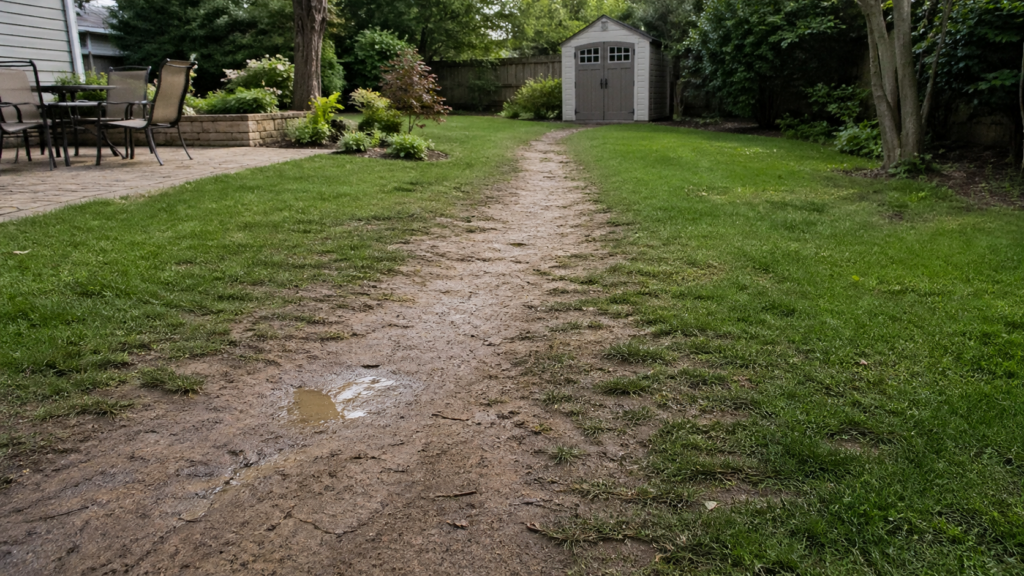
Strategically placed stepping stones or mulch paths can redirect traffic and give grass a chance to recover.
Shaded Areas, Toys, and Physical Obstructions
Toys, kiddie pools, and outdoor furniture left in the same spot for days block sunlight and air movement, creating yellow or brown spots underneath. Shade from mature trees can also thin the turf, allowing moss and weeds to spread.
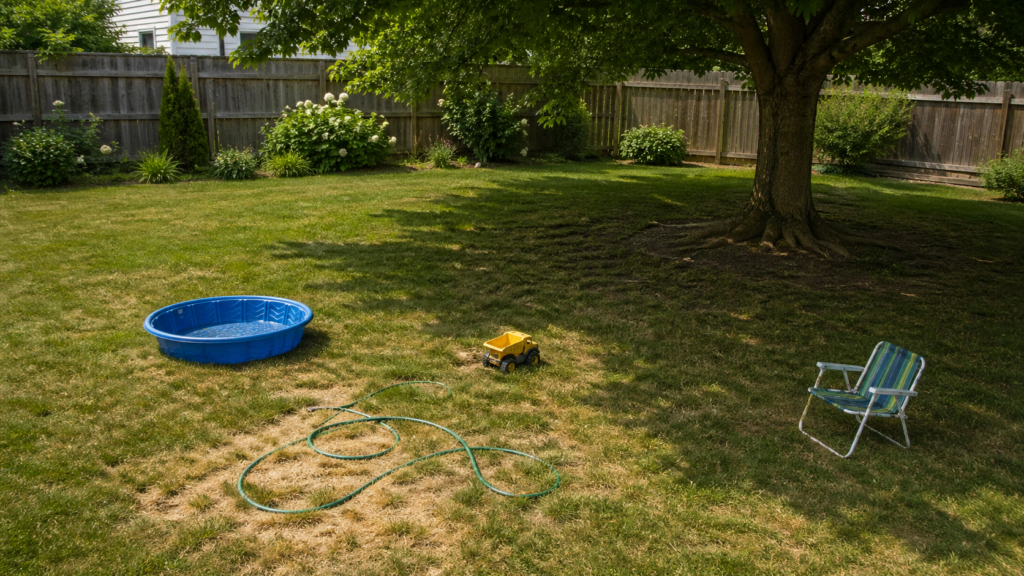
Rotate play equipment weekly, pick up hoses and yard items regularly, and consider pruning lower branches on trees to increase light and airflow—which also reduces brown patch fungus pressure.
How to Diagnose the Cause of Brown Spots in Your Lawn
Accurate diagnosis saves time and money because each cause needs a different solution. Use a systematic observation routine: examine shape and pattern, feel the soil, tug on grass plants, and look for insects or surface mold.
If turf lifts easily like a carpet, suspect grubs. If soil is bone-dry and hard, think drought or compaction. Take close-up photos and note recent weather before calling a professional.
Simple At-Home Tests
- Tug test: Firmly pull on a small handful of brown grass. If it pulls up easily with few roots, suspect grubs or severe root rot. Grass that resists may be dormant from drought or heat.
- Moisture check: Push a long screwdriver into the ground. If it’s hard to penetrate more than a couple of inches, the soil is likely too dry or compacted.
- Inspection: Cut a 6×6-inch patch in both healthy and damaged areas. Compare root depth and look for grubs, chinch bugs, or excess thatch thickness. Early morning after humid nights is best for spotting fungal signs like grayish mycelium.
When to Call a Professional
Seek help if brown patches cover over 20-30% of your yard, have returned for multiple seasons, or appear in multiple distinct patterns at once. Extensive insect or fungal problems often require commercial-grade materials and calibrated application equipment.
Commercial properties and high-visibility front yards benefit from proactive maintenance plans rather than reactive treatments after damage appears.
How to Fix Brown Spots: Step-by-Step Solutions
This section ties specific causes to appropriate treatment approaches. Some fixes are immediate (watering adjustments, removing objects), while others like overseeding unfold over weeks.
Repairing Fungus-Related Brown Patches
Improve cultural practices first: water in early morning, mow at proper height (3-4 inches), bag clippings in diseased areas, and avoid over-fertilizing during active disease. Fungicide treatments may be necessary for severe or recurring issues, timed to warm, humid conditions.
Tall fescue lawns benefit from fall overseeding to replace thinned patches after summer fungus damage.
Fixing Grub and Insect Damage
Use a two-part approach: stop active insects with properly timed treatment, then repair where roots have been destroyed. Preventive grub control is usually applied in late spring to early summer before grubs reach their most damaging stage.
Rake out dead grass, loosen topsoil, and reseed or sod heavily damaged areas once pests are controlled.
Restoring Lawns from Drought and Heat Stress
Correct watering patterns by delivering 1-1.5 inches weekly in deep morning applications. Raise mowing height by about half an inch to leave more leaf surface for photosynthesis. Check irrigation coverage and fix or upgrade spray heads as necessary.
Severely damaged areas may require spot seeding in early fall when cooler temperatures support germination.
Repairing Pet-Damaged Areas
Dilute fresh urine spots with a hose immediately to reduce nitrogen burn. For existing brown circles, rake out dead grass, loosen the top inch of soil, and apply compatible seed mix. Temporarily fence newly seeded areas to protect germination.
Creating a dedicated dog run with stone or mulch can permanently reduce future damage.
Aeration and Thatch Removal to Bring Back Green Color
Core aeration punches holes to relieve compaction, improve water and nutrients movement, and encourage deeper root growth. Perform aeration in early fall for cool-season lawns, often combined with overseeding.
Dethatching is more aggressive and used only when thatch exceeds 1/2 inch. Regular aeration and proper mowing prevent severe thatch from developing.
Overseeding and Spot Reseeding Thin or Dead Areas
Once the initial cause is corrected, overseeding fills bare spots, crowds out weeds, and restores a uniform, healthy lawn appearance. Use high-quality tall fescue or region-appropriate blends in early fall when soil temperatures remain warm.
Basic steps: loosen topsoil, spread seed evenly, rake gently, and maintain consistent moisture until new grass establishes.
Preventing Brown Spots: Long-Term Lawn Care Practices
Consistent, smart lawn care dramatically reduces brown spot recurrence. Prevention focuses on three pillars: correct watering, proper mowing and fertilization, and soil health including organic matter additions.
Smart Watering and Irrigation Management
Water early morning (4:00-9:00 a.m.) so grass blades dry during the day, reducing fungal risk. Deep, infrequent watering encourages deep root growth and better drought tolerance. Inspect irrigation systems twice per season to adjust heads, repair leaks, and ensure even coverage, and contact Precision Lawn & Landscape if you need a professional evaluation or repairs.
Proper Mowing and Fertilization
Keep cool-season grasses at 3-4 inches during the growing season to shade soil and reduce stress. Follow the one-third rule—never remove more than one-third of the blade at once. Use sharp mower blades and balanced, slow-release fertilization in spring and fall.
Soil Health, Aeration, and Organic Matter
Healthy soil with good structure and balanced pH helps grass withstand heat, pests, and lawn diseases. Periodic soil testing every 2-3 years guides amendments. Incorporate thin layers of compost during aeration to improve structure and microbial activity over time.
Why Work with Precision Lawn & Landscape
Precision Lawn & Landscape is a full-service lawn care and landscaping company based in Northern Virginia, serving Woodbridge, Manassas, Dumfries, and surrounding communities. Learn more about our locally owned lawn and landscape company and our long history in the area. Our team handles diagnosis, treatment, aeration, overseeding, fertilization, and design-build improvements like drainage solutions.
With experience in local soils, microclimates, and turf varieties, we quickly identify regional brown-spot patterns and implement effective solutions for both homes and commercial landscape properties in Northern Virginia. Contact us to schedule an evaluation if you’re seeing new, spreading, or recurring brown spots.

FAQs
These FAQs address common questions about timing, expectations, and local conditions for Northern Virginia homeowners.
Dormant grass usually feels anchored firmly and may show green at the blade base. Dead grass pulls up easily with little root system. Water a small test area deeply for 10-14 days; if no new green growth appears, that area likely needs reseeding.
Stopping the cause happens within days, but visible recovery takes several weeks depending on temperature and grass type. Fungal spots may stop expanding within a week, while green fill-in takes 3-6 weeks, especially with fall overseeding.
Early fall—September through early October—is ideal for repairing cool-season lawns with aeration and overseeding. Warm soil and cooler air support germination. Spring repairs work but face more challenges from summer heat and disease pressure, especially if regular professional grass cutting in Woodbridge, VA and nearby areas isn’t in place.
Rake out loose, dead material so seed reaches soil, but you don’t need to strip to bare dirt if living turf remains. For long-term success, many homeowners pair reseeding with ongoing landscaping services in Woodbridge, VA. Lightly loosen the top half-inch of soil, ensure good seed-to-soil contact, and maintain consistent moisture during germination.
Causes like brown patch fungus and insects can spread under favorable dry conditions, while pet damage or smothering from objects stays isolated. Early detection, proper treatment, and good cultural practices greatly reduce spread risk for properties in communities like Dumfries, VA lawn and landscaping clients and those using landscaping services in Manassas, VA.