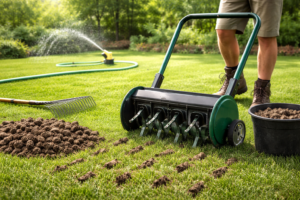
Spring in Northern Virginia signals a fresh start for your lawn! After months of cold temperatures and winter dormancy, the grass across Woodbridge, Manassas, Dumfries, Lake Ridge, and surrounding communities is ready to wake up and grow. But without the right care at the right time, your lawn can struggle to recover from winter damage, leaving you battling weeds and bare patches all summer long.
At Precision Lawn & Landscape, we’ve spent years helping residential and commercial property owners throughout Northern Virginia achieve that lush, green lawn they’re after. From spring cleanup to fertilization, weed control, and ongoing maintenance, our team handles it all so you can enjoy your yard without the guesswork!
Get Your Northern Virginia Lawn Ready for Spring (Quick Overview)
Most spring lawn care in our area kicks off when daytime highs consistently reach the mid-40s°F to low-50s°F—typically late March through April. This window is absolutely critical because cool-season grasses like tall fescue and Kentucky bluegrass are actively growing and responsive to care during this period.
Here’s a quick checklist of the major spring lawn maintenance tasks we’ll cover:
- Spring cleanup – Remove debris, dead grass, and winter damage
- Soil testing – Check pH and nutrient levels
- Aeration and dethatching – Relieve compacted soil and remove excess thatch
- Fertilizing – Apply targeted nutrients for strong growth
- Weed prevention – Apply pre emergent herbicides before weed seeds germinate
- Overseeding – Repair bare spots and high traffic areas
- Mowing – Start your first mow at the right height
- Watering – Establish proper irrigation for seed moist conditions
- Pest monitoring – Watch for early signs of grubs and disease
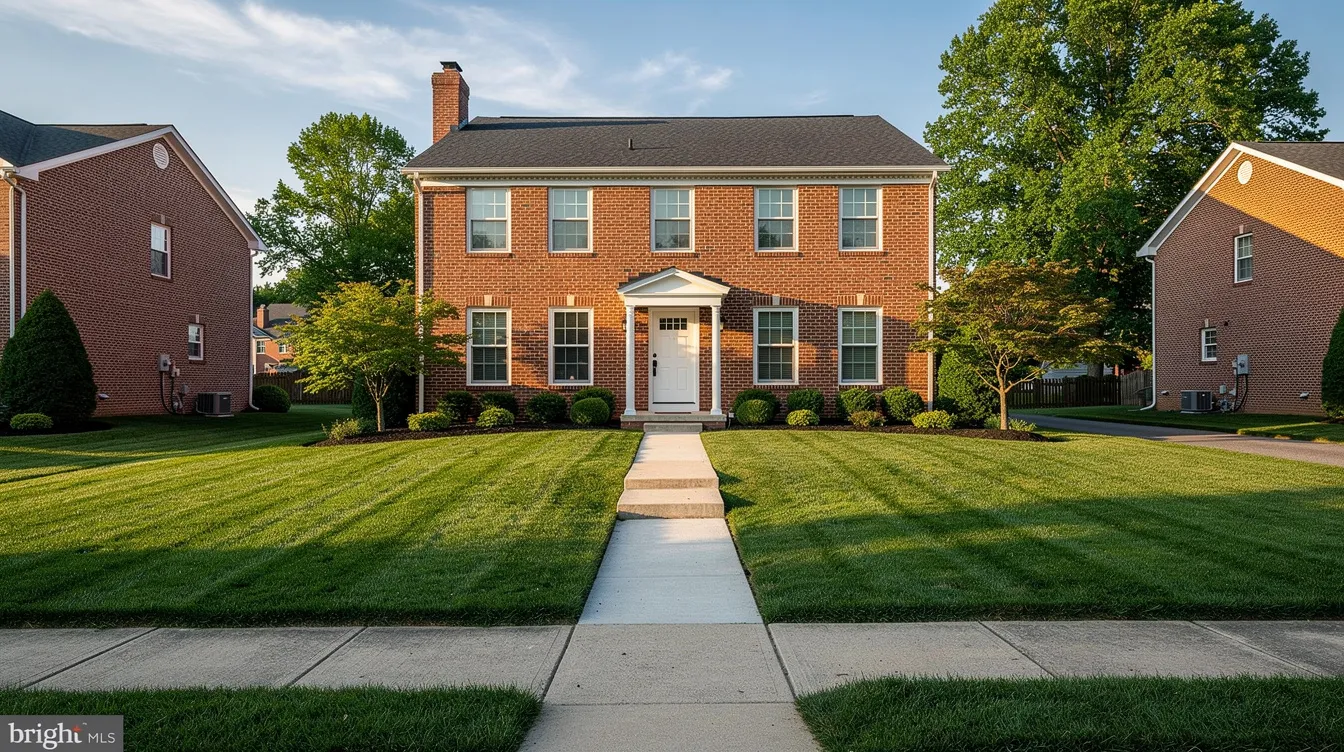
Timing Is Everything for a Greener Lawn
Northern Virginia’s Mid-Atlantic climate presents unique challenges. We experience cold winters, humid summers, and our soil tends to be heavy clay that compacts easily. Understanding these factors helps you time your spring tasks for maximum impact!
The spring season breaks into two key windows:
| Timing | Tasks | Soil Temperature |
|---|---|---|
| Early Spring (Late March–Mid April) | Cleanup, pre-emergent application, first mow | 45-55°F |
| Mid/Late Spring (Late April–May) | Aeration, overseeding bare spots, fertilization | 55-65°F |
Cool-season grasses common in NOVA wake up as soil temps rise into the 40s°F. During this growing season, your lawn needs support to build deeper roots before the summer months bring heat stress. A properly timed spring plan creates better drought tolerance and reduces more weed growth heading into June through August.
Precision Lawn & Landscape can create a customized schedule for your property based on size, shade patterns, and irrigation setup—whether you’re managing a single-family home or a commercial entrance.
Early Spring Assessment and Cleanup
Spring cleanup in Woodbridge and Manassas typically begins once snow risk drops and daytime highs stay in the mid-40s°F for a week or more—usually late March in our area.
Start by walking your entire lawn and noting problem areas:
- Bare patches from winter kill or salt damage near driveways
- Pooled water indicating drainage issues
- Debris accumulation—branches, leaves, trash
- Snow mold damage (gray or pink matted areas)
Rake or blow off matted leaves, acorns, and twigs to allow sunlight and air to reach the soil surface. This simple step prevents mold growth and helps existing grass recover faster!
For areas with light thatch or matted dead grass, gentle raking helps with snow mold recovery without tearing new shoots. Avoid aggressive power raking this early, as it can damage emerging growth.
While you’re out there, check irrigation heads, downspout outlets, and drainage areas for clogs. Winter debris often blocks these systems.
Precision Lawn & Landscape’s spring cleanups include debris removal, bed edging options, and hauling away waste—giving your yard a fresh start without the backache!
Dethatching and Aeration for Compacted NOVA Soils
Heavy, compacted clay soil is common throughout Northern Virginia subdivisions. This compacted soil restricts root zone development, limits water infiltration, and creates an environment where grass struggles to thrive.
Understanding Thatch
Thatch is a spongy layer of dead and living plant material between the grass blades and soil surface. A thin layer under ½ inch is actually beneficial—it cushions the lawn and helps retain moisture. However, thicker thatch holds excess moisture and can harbor disease.
When to dethatch:
- Only if thatch exceeds ½ inch thick
- In early to mid-spring once grass is actively growing
- Avoid dethatching immediately after pre-emergent application (it disrupts the herbicide barrier)
Core Aeration Benefits
Core aeration involves pulling plugs 2-3 inches deep from the soil. This process:
- Relieves compaction in heavy clay
- Improves water and nutrient penetration to roots
- Allows air to reach the root zone
- Creates seed pockets for overseeding
High-traffic lawns, kids’ play areas, and commercial entrances often benefit from annual or biennial aeration. If you’re combining aeration with pre-emergent herbicides, timing is critical—discuss the sequence with a professional!
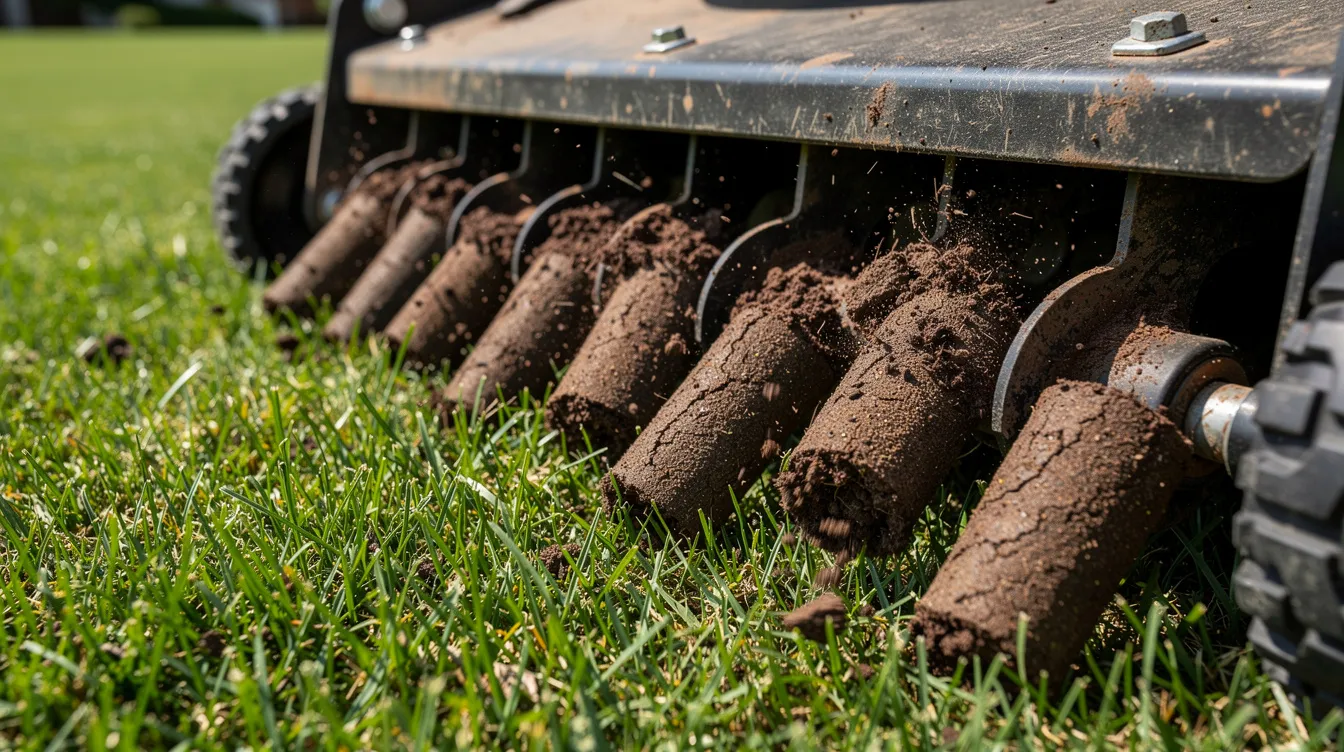
Precision Lawn & Landscape uses professional-grade aerators and can pair aeration with overseeding on tall fescue lawns when the timing is appropriate.
Test and Improve Your Soil
Soil testing isn’t required, but it’s highly valuable for Northern Virginia lawns where pH often trends acidic and nutrient levels vary widely from lot to lot.
You can test every 2-3 years through the Virginia Cooperative Extension or a reputable lab. Late winter or early spring—before heavy fertilization—is the ideal time!
Key Metrics to Review
| Metric | Ideal Range for NOVA | Impact |
|---|---|---|
| pH | 6.0–7.0 | Nutrient availability, grass health |
| Nitrogen (N) | Per test recommendation | Leaf growth, green color |
| Phosphorus (P) | Per test recommendation | Root development, seed establishment |
| Potassium (K) | Per test recommendation | Disease resistance, winter hardiness |
| Organic Matter | 3-5% | Soil structure, water retention |
To raise pH on acidic soil, lime is the standard amendment—but it can take up to 100 lbs per 1,000 sq ft to raise pH by one point. Most professionals limit applications to 50 lbs per 1,000 sq ft at a time and wait several months before retesting.
For clay-heavy or construction-fill lots, incorporating compost or high-quality topsoil during spring renovations improves long-term soil health and structure.
Precision Lawn & Landscape can interpret your soil reports and design a fertilization and amendment plan tailored to your property’s specific needs!
Spring Weed Prevention and Control
Common spring weeds in Northern Virginia include:
- Crabgrass – The biggest summer annual threat
- Chickweed and henbit – Winter annuals visible in early spring
- Dandelions – Perennial broadleaf with those distinctive flower stems
- Clover – Spreads aggressively in thin turf
Pre-Emergent Timing
The key to weed prevention is applying pre emergent herbicides before weed seeds germinate. For crabgrass, this occurs when soil reaches approximately 50-55°F at a 2-inch depth for several consecutive days.
In NOVA, this window typically falls in late March to early April. A helpful phenological indicator: when forsythia bushes begin blooming, soil temps are approaching that threshold!
Products containing prodiamine or dithiopyr create a barrier that prevents weeds from emerging. These products must be watered in within 24 hours of application to activate properly.
Important Conflicts
If you plan to overseed, you typically cannot use standard crabgrass preventers on those areas. Pre-emergent herbicides prevent weeds from germinating—and also stop new seed from establishing. Plan accordingly or skip pre-emergent in small repair zones!
For existing broadleaf weeds like dandelions, spot-treat with post emergent herbicides or hand-pull in garden beds. Always read labels for safety around kids and pets, and observe local regulations for commercial properties and HOAs.
Precision Lawn & Landscape offers season-long weed management programs that coordinate pre-emergent and post-emergent applications for both residential and commercial lawns.
Fertilizing for Strong Spring Growth
Cool-season lawns in Northern Virginia typically perform best when the main fertilization push happens in fall. Spring feeding should be lighter and targeted—enough to support early green color without promoting excessive leaf growth at the expense of strong roots.
Timing Your Spring Application
Apply the first spring fertilizer around the time of your first or second mow—often in April, depending on winter severity. Use a balanced or nitrogen-focused fertilizer guided by your soil test results rather than guessing!
Recommended spring approach:
- Apply ½ to 1 lb of nitrogen per 1,000 sq ft
- Choose slow-release nitrogen to reduce surge growth
- Avoid heavy applications that increase disease risk
Slow-release nitrogen promotes steady root development and reduces the need for constant mowing. It also minimizes runoff risk, which matters in our watershed-conscious region!
Commercial properties that need consistently deep green color may require a different approach than residential lawns focused on overall health. High-visibility entrances and signage areas often benefit from more frequent, lighter applications.
Precision Lawn & Landscape builds customized fertilization programs that coordinate with weed control and irrigation schedules for optimal results!
Overseeding and Repairing Bare Spots
While major renovation is best done in early fall, spring is still useful for repairing winter-damaged patches and addressing problem areas before they become more weeds taking over.
Identifying Problem Areas
Walk your property and look for:
- Salt burn near sidewalks and driveways
- Heavy traffic paths worn down to soil
- Pet spots with dead spots or yellowing
- High-shade zones where grass struggles
Tall fescue blends work well for most Northern Virginia lawns. Their deep roots and heat tolerance make them resilient through our humid summers!
The Repair Process
- Loosen the topsoil in bare patches with a rake
- Add compost or quality soil if the existing grade is low
- Broadcast seed at 6-8 lbs per 1,000 sq ft for overseeding
- Lightly rake to ensure good seed-to-soil contact
- Keep seed moist until germination (usually 7-14 days)
Remember: pre-emergent herbicides must be managed carefully around newly seeded areas. Either skip pre-emergent in repair zones or wait until new grass has been mowed two weeks or more!
Watering New Seed
New seed requires frequent, light watering—2-3 times daily in warm weather—to keep the seedbed moist. Once seedlings establish (after the first mow), transition to deeper, less frequent irrigation to encourage roots to grow downward.
Precision Lawn & Landscape offers overseeding and spot repair as part of spring renovation packages for both homes and commercial sites!
Spring Mowing Practices
How you mow high or low has major impacts on lawn health throughout Northern Virginia’s growing season. Getting your mowing routine right in spring sets the tone for summer success!
Starting Your First Mow
Begin mowing when grass reaches about 3-4 inches tall and the soil is no longer saturated. Mowing on wet soil compacts the ground and can tear grass rather than cut it cleanly.
Before that first mow, service your lawn mower:
- Change the spark plug if needed
- Sharpen or replace the blade for clean cuts
- Check oil levels and air filter
- Ensure the mower deck is level
The One-Third Rule
Never remove more than one-third of the blade height in a single mowing. Cutting too aggressively stresses the grass type, weakens roots, and invites disease!
For cool-season grasses like tall fescue, maintain a 3-4 inch high cutting height. Taller grass:
- Shades the soil, reducing weed germination
- Develops deeper roots for drought tolerance
- Requires less frequent watering
Grass Clippings Management
Leaving thin grass clippings on the lawn (mulch mowing) recycles nutrients back into the soil—returning up to 25-30%of the lawn’s nitrogen needs. Simply snap off thin clippings and let them decompose naturally. Only bag clippings if they’re thick enough to smother the grass beneath!
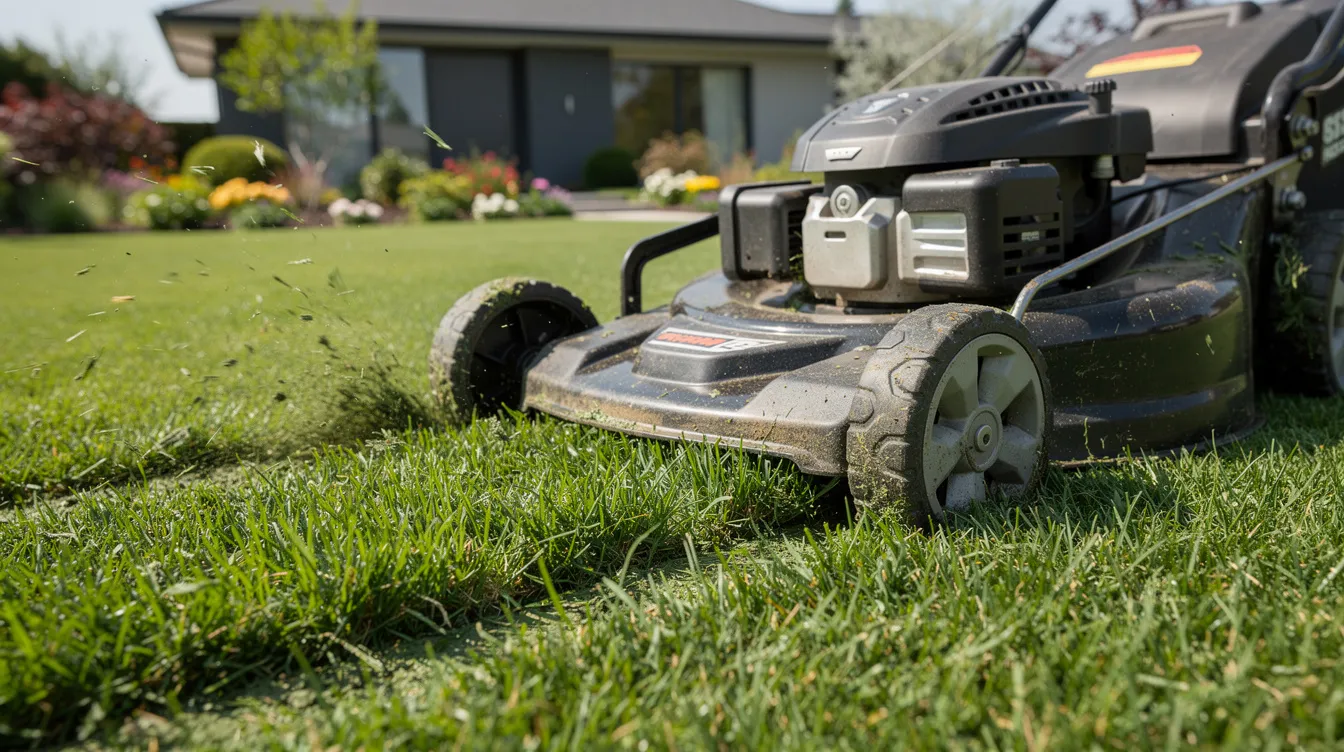
Precision Lawn & Landscape offers weekly and biweekly mowing programs, including trimming and clean edging for a finished look!
Watering and Early Pest Monitoring
Spring in Northern Virginia often provides adequate rainfall for established lawns. However, newly seeded areas and sandy spots may need supplemental water to stay in good shape.
General Watering Guidelines
| Situation | Water Needed | Frequency |
|---|---|---|
| Established lawn | ~1 inch/week total (rain + irrigation) | Deep, infrequent |
| New seed | Keep consistently moist | Light, 2-3x daily |
| Bare spot repairs | Moist until established | Frequent until first mow |
Deep, infrequent watering encourages roots to grow downward seeking moisture. Daily light sprinkling keeps roots shallow and weak. Early morning watering (before 10 AM) reduces disease risk by allowing blades to dry before evening!
Early Pest Signs
As temperatures warm, watch for:
- Grub damage – Spongy turf that peels back easily, revealing white C-shaped larvae
- Vole tunnels – Surface runways through the grass
- Fungal spotting – Circular dead spots or discolored patches in low, wet areas
Preventive grub control may be warranted in late spring on properties with a history of damage. Document suspicious bald spots and thinning so a lawn professional can correctly diagnose whether the issue is insects, disease, or simply traffic damage!
Precision Lawn & Landscape provides integrated pest and disease monitoring as part of ongoing maintenance programs.
Edging, Mulching, and Curb Appeal Enhancements
Spring is the ideal time to refresh your property’s curb appeal with crisp edges, clean beds, and fresh mulch. These finishing touches transform a good lawn into a great-looking yard!
Creating Clean Edges
Use manual or powered long handled edging shears or edgers to cut clean lines between:
- Lawn and walkways
- Grass and landscape beds
- Turf and driveway edges
Edge while the soil is still soft from spring moisture—it’s much easier than waiting until summer when the ground hardens!
Mulching Best Practices
Apply 2-3 inches of shredded hardwood mulch after soil warms in late spring. Keep mulch:
- A few inches away from grass crowns to prevent smothering
- 3-4 inches away from tree trunks to prevent rot
- Away from foundation vents and siding
Beyond the Lawn
Consider refreshing or redefining planting beds near entryways, mailboxes, and signage—especially for commercial properties where first impressions matter!
Spring is also an opportunity to add or update hardscape elements:
- Walkways and stepping stones
- Retaining walls
- Patios and seating areas
- Drainage solutions
Precision Lawn & Landscape offers design-build services, from new bed layouts to hardscapes, as part of broader spring property upgrades for both residential and commercial clients!
Partnering with Precision Lawn & Landscape This Spring
Professional spring lawn maintenance delivers benefits that are hard to replicate with weekend DIY efforts: correct timing based on soil temperatures, consistent care throughout the season, professional-grade equipment, and solutions tailored specifically for Northern Virginia soils and climate.
Our Spring Services Include:
- Spring cleanup and debris removal
- Core aeration and dethatching
- Soil testing and fertilization programs
- Pre-emergent and post-emergent weed control
- Overseeding and bare spot repair
- Weekly or biweekly mowing programs
- Bed edging and mulching
- Hardscape and landscape enhancements
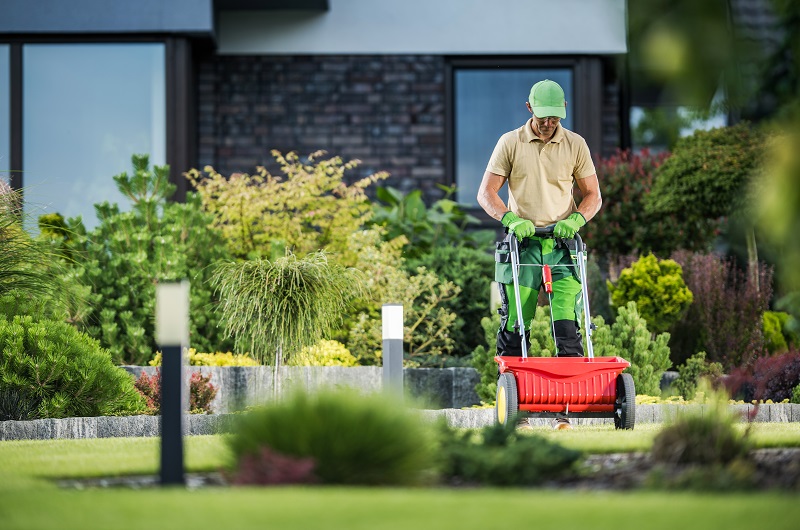
We serve homeowners and commercial property owners throughout Woodbridge, Manassas, Dumfries, and nearby Northern Virginia communities!
Whether you’re dealing with winter damage, persistent weeds, or simply want a healthy lawn without the hassle, our team can create a customized plan for your property. We stand behind our work with a satisfaction guarantee and can build ongoing maintenance programs that carry your lawn from spring through the rest of the year and into the fall feeding season.
Ready to get your spring lawn in good shape? Contact Precision Lawn & Landscape today at 703-493-1811 to schedule an on-site consultation or request a spring tune-up plan for your home or commercial property. Let’s get your lawn ready to thrive this growing season!