Residential Core Aeration Services in Woodbridge, Manassas, Dumfries & Surrounding Areas
We recommend scheduling our core aeration service in the fall to ensure your lawn is at its strongest.
Compacted soil can make it difficult for your lawn to absorb the water, oxygen, and nutrients it needs to maintain healthy growth. At Precision Lawn & Landscape, our professional lawn aeration service helps loosen compacted soil and improve growing conditions below the surface so your turf can develop stronger, healthier roots. Our core aeration services are part of our broader residential lawn care solutions for homeowners throughout Northern VA. By removing small plugs of soil from the lawn, we create pathways that allow essential resources to reach the root zone more effectively and help your grass get more out of ongoing fertilization, watering, overseeding, and other lawn care treatments.
What Is Core Aeration?
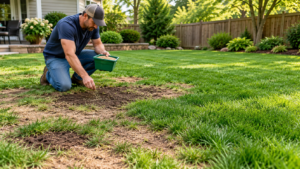
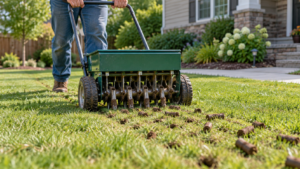
Core aeration is a lawn care process that uses specialized equipment to remove small plugs, or cores, of soil and thatch from the turf. Unlike methods that simply puncture the surface, core aeration physically removes material from the ground, temporarily creating openings throughout the lawn that help relieve soil compaction.
As these openings remain in the soil, water, air, and nutrients can move more easily into the root zone. The extracted soil cores are typically left on the lawn, where they gradually break down and return beneficial organic material to the soil.

How Core Aeration Helps Your Lawn
Healthy grass depends on much more than what happens above the soil. Compacted ground can restrict root development and limit your turf’s ability to access the resources it needs, which is why professional core aeration can play such an important role in an effective lawn care program.
Relieves Soil Compaction
Regular foot traffic, mowing equipment, weather conditions, and naturally dense soils can gradually compress the ground beneath your lawn. Core aeration creates additional space within the soil, giving grassroots more room to spread and establish deeper growth.
Improves Water Absorption
Compacted soil can cause water to remain near the surface or run off instead of penetrating into the root zone. Aeration opens pathways through the soil that can improve water infiltration and help your lawn make more effective use of rainfall and irrigation.
Increases Oxygen Flow to the Roots
Grassroots need oxygen to support healthy biological processes and continued development. By opening compacted soil, core aeration improves air exchange and allows more oxygen to reach areas below the surface.
Helps Nutrients Reach the Root Zone
Fertilizer and naturally occurring soil nutrients are most useful when they can reach the roots of your grass. Core aeration improves nutrient movement into the soil, helping support greener growth and more effective lawn treatments.
Encourages Stronger Root Development
When soil becomes densely compacted, roots may have difficulty expanding downward and outward. Relieving that pressure creates better conditions for a deeper, more extensive root system that can help the lawn withstand environmental stress.
Helps Reduce Excessive Thatch Problems
A moderate layer of thatch can be beneficial, but excessive buildup may interfere with water and nutrient movement. Core aeration helps disrupt the thatch layer while bringing soil microorganisms closer to the surface, where they can assist with natural decomposition.
Signs Your Lawn Needs Core Aeration
Soil compaction is not always immediately obvious, but your lawn may begin showing symptoms when roots are unable to access sufficient air, water, and nutrients. Scheduling a professional lawn aeration service may be beneficial if you notice:
- Hard or compacted soil: The ground feels unusually firm and is difficult to penetrate with a screwdriver or similar tool.
- Heavy foot traffic: Areas where children, pets, guests, or lawn equipment regularly travel may become compacted faster.
- Water pooling or runoff: Rain or irrigation collects on the surface rather than soaking into the ground efficiently.
- Thin or weak grass: Turf struggles to grow densely even when it receives appropriate watering and fertilization.
- Bare or patchy areas: Compacted soil can prevent roots and new grass seedlings from establishing successfully.
- Slow recovery after stress: The lawn takes longer than expected to bounce back from heat, traffic, drought, or other stress.
- Heavy thatch accumulation: A dense layer of organic material between the grass and soil may interfere with normal nutrient and water movement.
Some degree of soil compaction is common in established lawns, particularly in frequently used outdoor areas. Incorporating annual aeration into your lawn care routine can help prevent compaction from becoming severe enough to noticeably affect turf health.
Our Core Aeration Process
At Precision Lawn & Landscape, we use professional aeration equipment and a straightforward process designed to improve soil conditions while preserving the nutrients already present in your lawn.
1. Evaluate the Lawn
Before aerating, we consider the overall condition of the property and the areas that will receive treatment. This helps us complete the service efficiently and focus on giving the lawn the soil relief it needs.
2. Aerate the Turf With Professional Equipment
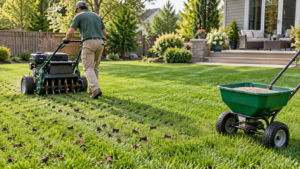
We use a core aerator to go over the lawn and mechanically pull plugs of soil from the ground. Removing these cores creates openings throughout the turf that relieve compaction and improve access to air, moisture, and nutrients.
3. Leave the Soil Cores in Place
Once aeration is complete, we leave the extracted soil plugs on the lawn rather than collecting them. The cores naturally break apart and decompose over time, returning nutrients and organic material to the soil.
4. Allow the Lawn to Recover
The aeration holes gradually close as the turf continues growing. During this period, the lawn has improved access to the resources it needs to support root development and healthy growth.
5. Add Complementary Lawn Services When Appropriate
Core aeration can also create ideal conditions for other lawn treatments. Depending on your lawn’s needs, aeration may be paired with services such as overseeding or topdressing to further improve turf density and soil quality.

When Is the Best Time to Aerate Your Lawn?
We offer core aeration services during both the spring and fall, but fall is generally the preferred time to aerate lawns throughout Northern VA. Cooler temperatures reduce environmental stress on the grass, while favorable growing conditions can help the turf recover after aeration and develop stronger roots before winter.
Our fall aeration season typically begins around September, continues through October, and starts slowing down by November. For many residential lawns, we recommend scheduling core aeration approximately once per year to help maintain good soil structure and consistent access to water, oxygen, and nutrients.
We recommend scheduling our core aeration service once a year to ensure your lawn always has optimal access to nutrients and resources.
Core Aeration vs. Spike Aeration
Not every type of lawn aeration works the same way. Two commonly discussed methods are core aeration and spike aeration, but they address the soil very differently.
Core Aeration | Spike Aeration |
Removes plugs of soil from the lawn | Pushes spikes into the soil |
Physically removes compacted material | Moves soil outward around each opening |
Creates channels for water, nutrients, and air | Creates temporary holes in the surface |
Helps relieve existing soil compaction | May provide limited short-term soil openings |
Uses specialized core aeration equipment | Can be performed with shoes, rollers, or spike equipment |
Well suited for lawns experiencing significant compaction | More appropriate for limited applications |
At Precision Lawn & Landscape, our core aeration services use equipment that pulls soil plugs from the lawn. Because material is physically removed, there is additional room for compacted soil to loosen and for water, nutrients, and oxygen to enter the root zone.
Spike aeration, by comparison, primarily creates openings by pushing soil to the sides. While this may temporarily create holes in the surface, it does not remove compacted soil in the same way that core aeration does.
For homeowners looking to address soil compaction as part of a broader lawn care plan, core aeration provides a more comprehensive approach.
Core Aeration and Overseeding
Core aeration and overseeding complement each other particularly well. Aeration creates thousands of small openings throughout the lawn, giving newly applied grass seed better opportunities to reach the soil rather than becoming trapped entirely within existing turf or thatch.
Improved seed-to-soil contact can help create better conditions for germination and establishment. Pairing overseeding with our lawn aeration service can be especially useful for lawns with thin grass, bare areas, declining turf density, or sections that could benefit from fresh, healthy growth.
Pair Core Aeration With Our Topdressing Service for Better Lawn Results

Another effective way to build on the benefits of core aeration is to combine it with our professional topdressing service. Topdressing involves spreading a thin layer of nutrient-rich organic material across the lawn to improve soil conditions and support healthier turf.
Applying topdressing after aeration allows some of that material to settle directly into the newly created openings. This helps introduce beneficial organic matter deeper into the soil profile, where it can improve soil quality and support root health. When combined strategically, aeration and topdressing can help create an even stronger foundation for thicker, greener grass.
You can pair our core aeration service with overseeding to fill bare and patchy areas on your lawn with new, healthy grass growth!
Financing Options Through HFS
Investing in your landscape and lawn does not always have to mean covering the entire project cost upfront. Precision Lawn & Landscape offers financing options through HFS to help qualifying homeowners manage the cost of eligible lawn and landscaping improvements with convenient payment options. Our team can provide additional information about available HFS financing options and help you determine whether financing may be appropriate for the services you are considering.
Serving the Greater Northern VA Areas
Precision Lawn & Landscape provides professional lawn care and lawn maintenance services throughout Northern Virginia, including Woodbridge, Manassas, Dumfries, and surrounding communities. Whether your lawn is suffering from compacted soil, thinning turf, poor water absorption, or you simply want to incorporate preventative aeration into your annual lawn care routine, our team can help you build a healthier lawn from the soil up.
Contact Us Today to Schedule a Lawn Aeration Service
Compacted soil can make it difficult to build the thick, healthy lawn you want, no matter how much attention you give the grass above the surface. Core aeration addresses the lawn at its foundation by opening compacted soil and improving access to the water, air, and nutrients grass roots need.
Whether you need aeration by itself or want to pair our core aeration services with overseeding, topdressing, fertilization, or other lawn care treatments, our team can help you develop the right approach for your property.
Contact Precision Lawn & Landscape today to request a quote and schedule professional core aeration for your Northern Virginia lawn.
FAQs
How often should you aerate your lawn?
Many residential lawns benefit from core aeration about once per year, especially when the soil is prone to compaction or receives frequent foot traffic. Lawns with less compacted soil may require aeration less frequently, so the ideal schedule depends on the condition and use of your property.
Does core aeration damage grass?
Core aeration temporarily removes small plugs from the lawn, but the process is intended to improve growing conditions rather than harm healthy turf. The openings gradually close as the grass grows and the extracted soil cores naturally break down.
Should I water my lawn before core aeration?
Core aeration generally works best when the soil contains some moisture but is not excessively wet or saturated. If conditions have been very dry, watering beforehand may help the aerator penetrate the soil and pull more effective cores.
Should I fertilize my lawn after core aeration?
Yes. Aeration can create favorable conditions for fertilization because the newly created openings give nutrients additional opportunities to reach the soil and root zone. Fertilization, aeration, and other treatments can be coordinated as part of a larger residential lawn care program.